Part IV · Grow
Seeds: choosing, storing, sowing and saving your own
Functional diagram, not to scale.
Open-pollinated varieties or F1 hybrids, dry and cool storage, germination test, sowing in hydroponics, harvesting and cleaning tomato, lettuce or basil seeds, labeling and swap rules: the whole seed cycle, all the way to the forum seed swap.
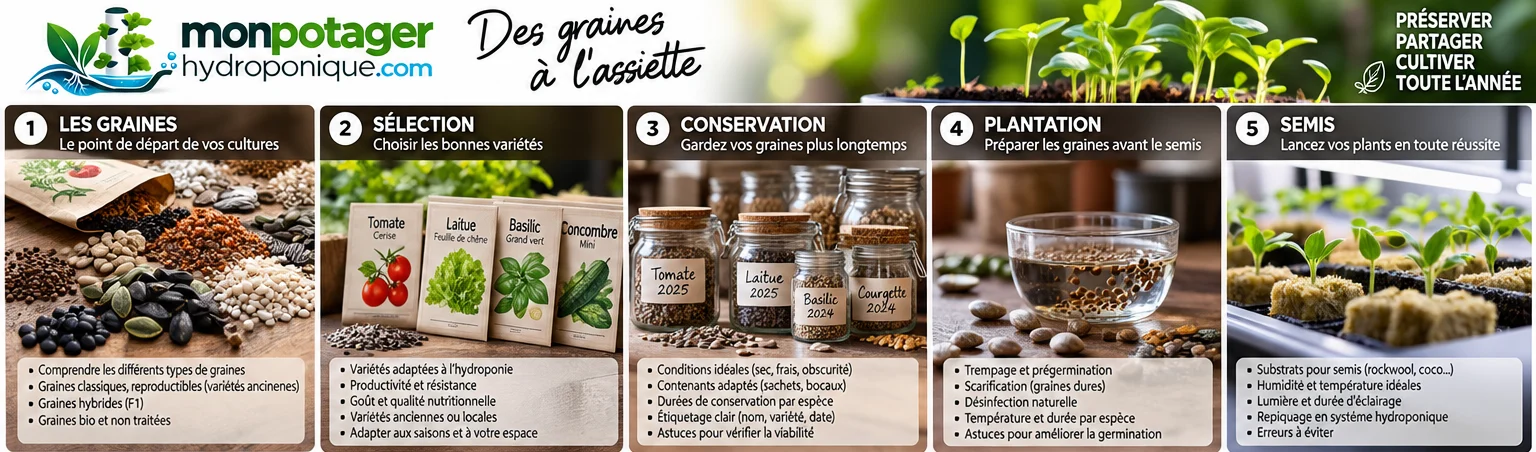
Every garden starts with a seed, and a hydroponic garden is no exception: a sponge, a rockwool cube, a few seeds, and the tower fills up. But seeds have to be chosen, stored and tested, and you can also save them from your own plants. Here is the complete cycle: choosing the right varieties, keeping them alive, sowing them, then producing your own seeds and sharing your extras on the forum seed swap.

1. Choosing your seeds

Open-pollinated variety or F1 hybrid?
On a seed packet, F1 means a first-generation hybrid: the cross between two parent lines chosen by a breeder. The F1 plant is often vigorous and very uniform. Its seeds, however, mix the traits of both parents: the next generation gives a mix of different plants, usually less interesting than the mother plant.
An open-pollinated variety (or heirloom variety, one that “breeds true”) comes back identical from its seeds, as long as you avoid cross-pollination. It is the mandatory starting point if you want to save your seeds or offer them on the seed swap.
| F1 hybrid | Open-pollinated variety | |
|---|---|---|
| Uniformity | Very high | Good, with some diversity |
| Saved seeds | Uneven offspring, not recommended | Grow the same variety again |
| Packet price | Higher | Lower, and free once saved |
| For the seed swap | No | Yes |
Criteria specific to hydroponics
- A compact habit: cut-and-come-again lettuces, small-leaved basil, dwarf or determinate cherry tomatoes for a tower or a jar.
- Slow bolting for salad greens and cilantro, especially under LEDs or in summer: look for “slow to bolt” or “summer” on the packet.
- Seeds that are easy to handle: pelleted lettuce seeds can be placed one at a time in a sponge; on the other hand, they keep for a shorter time.
- Untreated seeds: some commercial seeds are coated with a colored fungicide. Choose untreated seeds, organic if possible; only these are accepted on the seed swap.
2. Storing your seeds
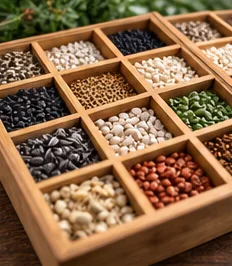
A seed is alive: it breathes slowly and draws on its reserves. Three enemies speed up its aging: moisture, heat and light. US agricultural extension services sum up the rule this way: each percentage point less moisture in the seed, and each 5 °C (9 °F) lower, roughly doubles its storage life.
- Fully dry: a seed that is ready to store snaps cleanly instead of bending. Recommendations aim for less than 8% moisture.
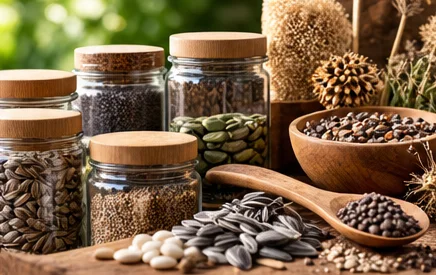
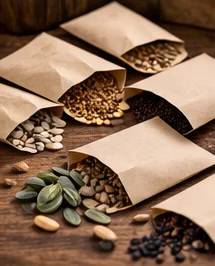
- In paper envelopes, labeled, stored in an airtight glass jar with a silica gel packet (the kind found in shoe boxes works).
- Cool and dark: a cupboard in an unheated room, or the refrigerator if the jar is truly airtight. Take it out a few hours before opening it, to avoid condensation on the cold seeds.
- Never in the greenhouse, on top of the fridge, near the heater or next to your heated reservoir.
How long do they last?
Approximate, conservative times for good germination, for properly stored seeds (Colorado State University Extension). Many live longer: the germination test settles it.
| Conservative time | Species |
|---|---|
| 1 year | Lettuce, onion, parsley |
| 2 years | Sweet and hot peppers |
| 3 years | Spinach, carrot, bean |
| 4 years | Tomato, cabbage and kale, radish, beet, squash |
| 5 years | Cucumber, melon |
The 10-seed germination test
- CountTake 10 seeds at random from the batch.
- MoistenPlace them on a damp (not soaked) paper towel and fold it over.
- EncloseSlip it all into a freezer bag or a closed box at room temperature; label it with the date.
- CheckOpen it every day to let air in and keep it damp.
- Count the sprouted seedsAfter the usual time for the species (a few days for lettuce or radish, one to two weeks for pepper or parsley), 8 sprouted seeds means 80%.
- Write it downNote the rate and the date on the envelope. Above 80%, all is well; between 50 and 80%, sow more thickly; below that, replace the batch.
3. Sowing in hydroponics
Preparing seeds before sowing
- Soaking: large seeds (peas, beans, nasturtium) sprout faster after a few hours in lukewarm water, up to overnight. Not needed for small seeds, which get damaged.
- Scarification: a few seeds with a very hard coat, like nasturtium, come up better if you lightly wear down their coat with a file before soaking, without touching the embryo.
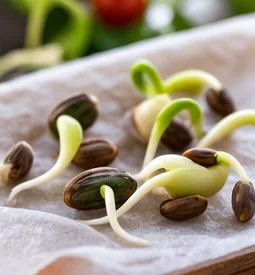
- Pre-sprouting: sprout them on damp paper, then place the already open seed in the cube. Handy for old batches or rare seeds.
At sowing time
The detailed technique (media, moisture, light, transplanting) is in the guide Sowing and transplanting in hydroponics. The essentials, from the seed side:
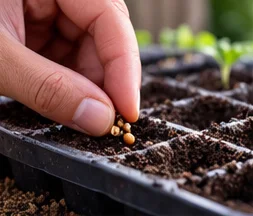
- A clean, inert medium: a pre-soaked rockwool cube, a coco plug or a horticultural sponge. Never garden soil in a recirculating system.
- Two or three seeds per cube if the batch is old or barely tested, then keep the best seedling.
- Little or no covering for small seeds: lettuce germinates better on the surface, barely covered.
- The right temperature: many lettuces germinate poorly above about 25 °C (77 °F); tomato, pepper and basil, on the contrary, prefer warmth.
- No nutrients at first: the seed has its own reserves. The nutrient solution, diluted, comes in with the first true leaves.
- Staggered sowing: a few seeds every two or three weeks ensure a continuous harvest of salad greens and herbs.
4. Saving your own seeds
Start with the easiest
Self-pollinating species usually pollinate themselves, within their own flower: tomato, lettuce, peas, beans, and largely pepper. Their seeds stay true to the variety without any special precautions. Cross-pollinating species, on the contrary, cross easily with other varieties of the same species, through insects or wind: cucumber, melon, squash, corn, and also basil or arugula. For these, only one variety in flower at a time, or hand pollination under a row cover.
Choosing seed plants
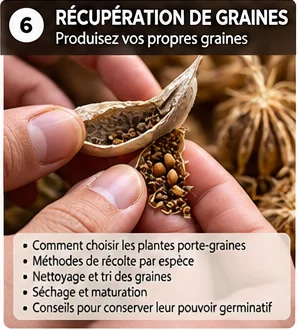
Mark the best plants with a tie or a label: healthy, vigorous, true to the variety and, for salad greens, the last ones to bolt. If you save seed from the first lettuce that bolts, you are selecting for exactly that: fast bolting. If possible, use several plants to keep some diversity.
Species by species
| Species | When to harvest | How | Difficulty |
|---|---|---|---|
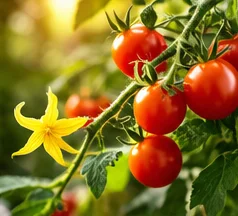
| Cherry tomato | Fruit fully ripe, even overripe | Ferment for a few days in a little water, rinse, dry (how-to below) | Easy |
| Sweet and hot pepper | Fruit at full color, slightly softened | Detach the seeds from the core, dry on a plate. Gloves for hot peppers | Easy |
| Lettuce | When the flower heads form white fluffy tufts | Shake the stalks in a paper bag, sift out the debris | Easy, but slow |
| Arugula, bok choy | Siliques (thin pods) dry and brown | Cut the stems, finish drying in a bag, crush | Medium: crosses with other varieties |
| Basil | Flower spikes dry and brown | Rub the spikes over a tray, blow away the debris | Medium: basils cross with each other |
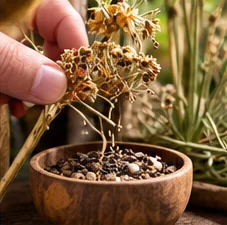
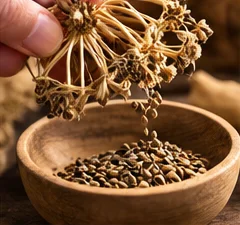
| Cilantro | Round seeds brown and dry | Cut the umbels, dry, thresh; these are also the coriander seeds used as a spice | Easy |
| Nasturtium | Large seeds that drop on their own | Pick up, dry for several weeks | Very easy |
| Cucumber, melon | Fruit left to ripen well past the eating stage | Scoop out the seeds, short fermentation, rinse, dry | Difficult: crosses, often F1s |
| Parsley | In the second year (biennial plant) | Dry umbels, threshing | Difficult in hydroponics |
| Strawberry | Seeds do not grow the same variety again: propagate from runners, which is faster and true to type. | ||
Saving tomato seeds by fermentation
- Choose the fruitA fully ripe tomato, from a healthy plant that is true to the variety (not an F1).
- Scoop outCut it in half and squeeze the seeds and pulp into a jar; add a little water.
- Let it fermentCover with a paper towel and leave for a few days at room temperature, stirring every day. A white film forms: that is normal. Fermentation breaks down the gel coating that slows germination.
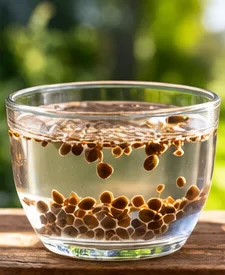
- SortAdd water and stir: good seeds sink, pulp and empty seeds float. Pour off the surface and repeat until the water is clear.
- Rinse and dryPour through a fine strainer, spread on a plate or a coffee filter, in the shade with good airflow, for about a week. No oven or radiator.
- StoreOnce fully dry, separate them, put them in an envelope, label it and put it in the jar.
5. Labeling: the batch’s memory
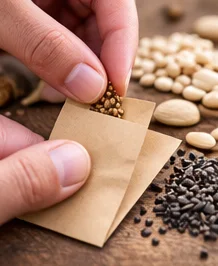
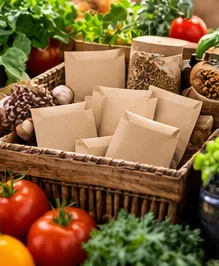
An unlabeled envelope is a lost envelope. Write down at least:
- the species and variety;
- the year and place of harvest, and the growing system (tower, Kratky, NFT);
- the germination rate and the test date;
- the original source (seed company, seed swap member) and your notes: earliness, taste, resistance to bolting.
This is also what community seed swaps and seed libraries ask for, like those of Nature & Progrès in Belgium: a well-described, tested batch, grown by the donor.
6. What the regulations say
- In France, the Ministry of Agriculture points out that home gardeners may swap seeds of non-protected varieties for free. The vegetables harvested can be eaten or sold freely. Since the law of June 10, 2020, seeds of public-domain varieties may also be sold to non-professional users, which secured the activity of nonprofit associations.
- In Belgium, seed libraries and swaps between individuals take place freely as long as nothing is sold; marketing seeds is subject, as everywhere in the European Union, to specific rules.
- Varieties protected by a plant variety right (COV, the EU and French equivalent of plant variety protection) remain so for 25 or 30 years depending on the species: do not multiply them for distribution without the breeder’s consent. Most heirloom and open-pollinated varieties are free.
- From outside the European Union, bringing seeds in requires a phytosanitary certificate: no mailing of seed packets between individuals from or to a non-EU country.
These pointers summarize official texts and are not legal advice; if in doubt, check with the plant health authority in your country.
7. Sharing: the seed swap
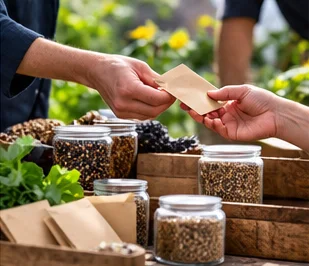
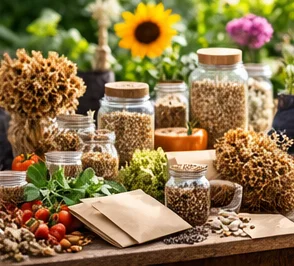
A tomato gives hundreds of seeds, a lettuce gone to seed thousands: far more than a tower can hold. The forum seed swap is made for these extras.
- Giving, looking for or swapping: each listing states the species, variety, harvest year, germination rate, quantity and how it will be handed over.
- Reading is open to all; to post, reply or contact a member, you just need to be logged in.
- The “Contact” button sends an email to the member: postal addresses are never written on the forum.
- The rules are simple: open-pollinated varieties, untreated seeds, healthy plants, free gifts and swaps (shipping costs can be shared).
Frequently asked questions
Can you save seeds from a plant grown in hydroponics?
Yes. The plant produces normal seeds whether it grows in soil or in nutrient solution. The only constraint is space: a lettuce or basil plant going to seed takes up its spot for several weeks. A Kratky jar or the end of the season works very well.
Why don’t my F1 hybrid seeds grow the same plant again?
An F1 hybrid is a cross between two different parent lines. Its seeds mix the traits of both parents: the next generation is uneven and often less vigorous. To grow the same plant again, choose open-pollinated or heirloom varieties.
How long do seeds keep?
It depends on the species and above all on the conditions. Conservative figures range from about one year for lettuce, onion or parsley to five years for cucumber or melon. Fully dry, cool and in an airtight jar, many last longer: a germination test settles it.
How do you do a germination test?
Place 10 seeds on a damp paper towel, fold it over and slip it into a bag or a closed box at room temperature. Count the sprouted seeds after the usual time for the species: 7 out of 10 means 70%. Below 50%, sow more thickly or replace the batch.
Is it legal to swap seeds between individuals?
Yes for free gifts and swaps between home gardeners of varieties not protected by a plant variety right. Selling seeds falls under specific regulations. For tomato and pepper, only swap seeds from healthy plants: the ToBRFV virus is transmitted through seeds.
- Colorado State University Extension, Storing Vegetable and Flower Seeds (7.221)
- Washington State University Extension, A Step-by-Step Guide to Saving Seeds
- French Ministry of Agriculture, Jardiniers amateurs et professionnels : quelle est la législation à propos des semences ?
- Law no. 2020-699 of June 10, 2020 on the transparency of information on agricultural and food products (Légifrance)
- Nature & Progrès Belgique, seed exchange
- Commission Implementing Regulation (EU) 2024/2970 (ToBRFV, EUR-Lex)