
Hobby hydroponics · from the jar to the patio
Growing without soil, measure without getting it wrong.
Sourced guides, crop guides, calculators and a forum to grow lettuce, herbs, tomatoes, beans and strawberries, even without a garden.
Small space, in-ground gardener, cooking, aquaponics: all the paths
- Observesymptom, where, since when
- MeasurepH, EC, flow rate, water temp.
- Understanda likely cause
- Correcta single variable
- Ratein the grow log
100 % free · online or printable
The grow log free to track your hydroponic crops
Sowing, pH, EC, water temperature, weather, harvests: log everything in one place to understand what works for you, and repeat it next season.
0 €, in both cases: all you need is a member account, also free.
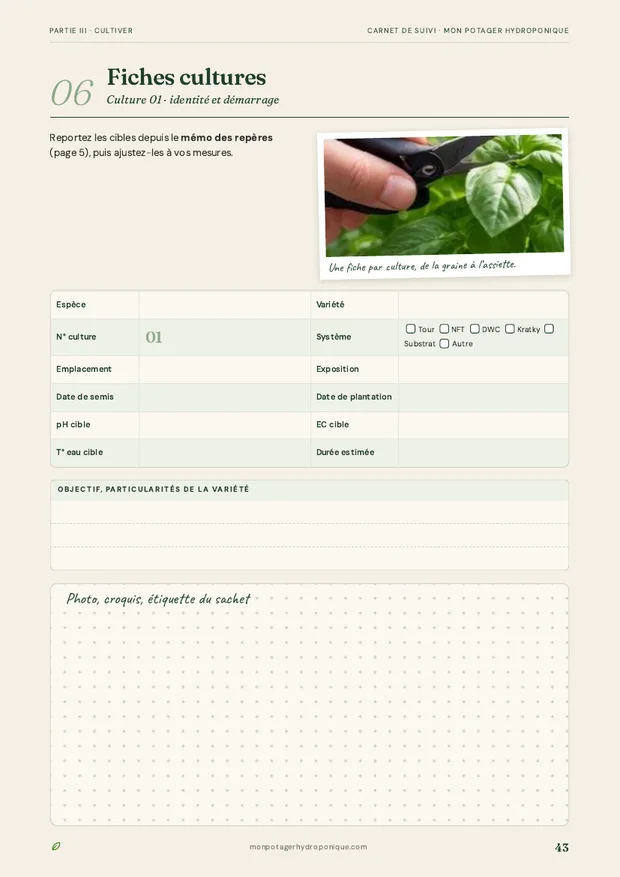
- Seeds, sowing, planting: dates, germination, transplanting
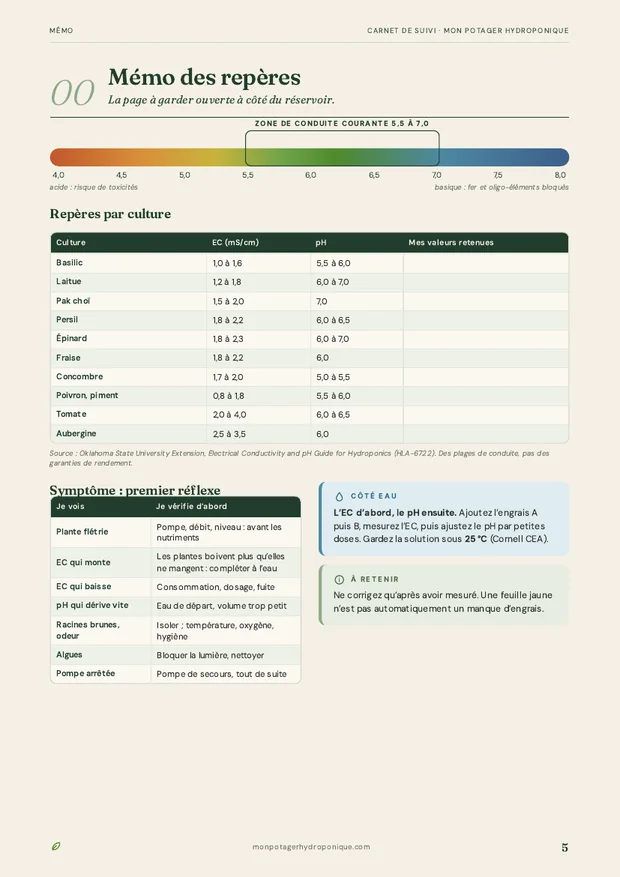
- Water and nutrients: pH and EC before and after, reference values by crop
- 10 crop guides from seed to weighed harvest
- Season review: kilos, cost per kilo, varieties to grow again
- 100 % free
- No credit card
- No commitment
- Your data stays private
A free account in one minute: the grow log, the forum, the seed swap and your notes on every guide. See the grow log pages
New · My online logbook
Your garden, logged week after week
A pH reading, a weighed harvest, a note about the roots: a few seconds on your phone, and the logbook draws the charts, adds up the pounds and works out the cost per kilo for you.
- The pH and EC chart draws itself with every reading
- Kilos, germination, cost per kilo: calculated for you
- An excerpt attached to the forum in one click, for a quick diagnosis
- Private by default; share a season if you want
Free, ad-free, exportable to a spreadsheet at any time.
Read this first
Guides step by step
Every figure has its source, every tutorial its duration and level. Anything not verified is flagged as such.
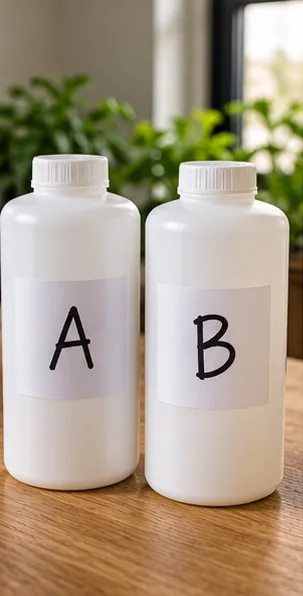
Make your own two-part (A and B) hydroponic nutrient: a step-by-step DIY recipe
Five mineral salts, a scale accurate to 0.1 g and two bottles: the recipe for a two-part A and B hydroponic nutrient, for a few cents per reservoir. Doses, what the final solution contains, step-by-step mixing, a calculator, mistakes to avoid and safety rules.
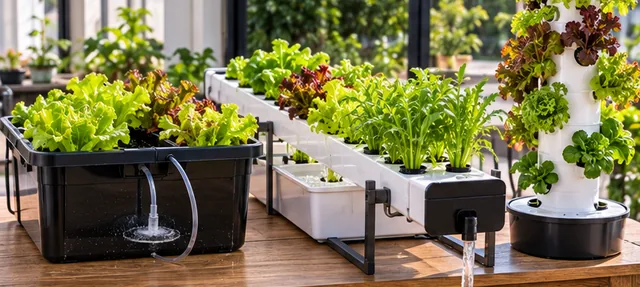
DWC, NFT, towers, aeroponics, growing media: what side-by-side trials show
Which hydroponic system grows best? Six university trials grew the same plant in several systems at once. Their results, why the winner changes with the crop, the nutrients and the criterion (yield, water, energy, space), and a calculator to compare the electricity use of your setup.
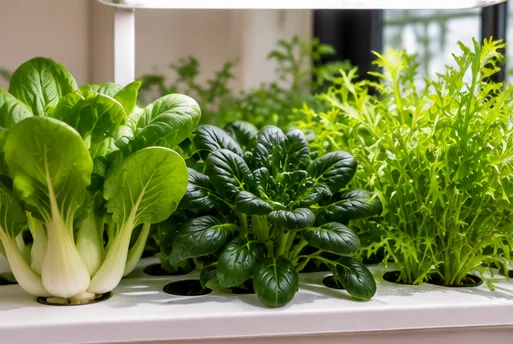
Asian greens in hydroponics: bok choy, mizuna, tatsoi and komatsuna
Fast, compact and generous, Asian greens are among the easiest leafy vegetables to grow hydroponically. The four main ones, what trials say about EC and light, how to keep them from bolting, whole-head or cut-and-come-again harvests, and a harvest calculator.
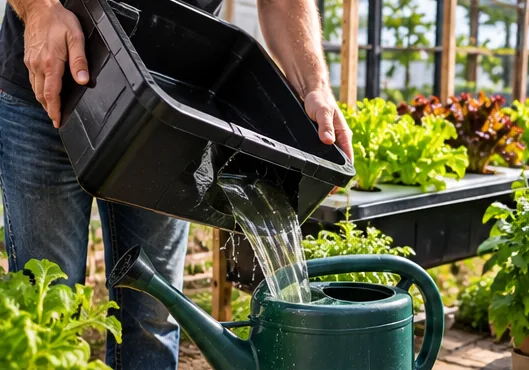
Spent nutrient solution: when to change it, how to make it last, what to do with the drained water
Do you really need to empty your reservoir every two weeks? What trials at the University of Florida and São Carlos show, how to read EC drift, top up with water or with solution, drain part of the reservoir, and where to put the drained water without polluting. With a top-up and partial drain calculator.
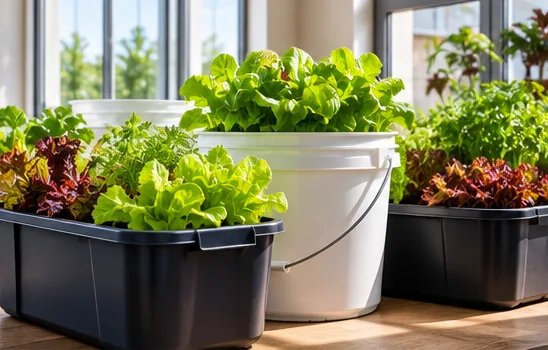
Plastics and Hydroponics: Which Ones to Choose for a Safe Harvest
Reservoirs, tubing, net pots, floating rafts, 3D-printed parts: in hydroponics, the nutrient solution sits in plastic for months. Resin codes and food-grade markings, what studies show about heat, bisphenol A, plasticizers and microplastics, a method to audit your system, and a container checker.
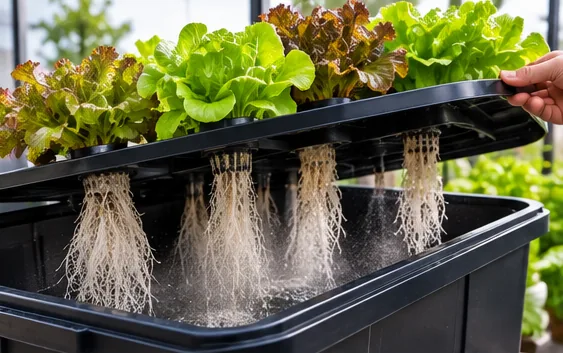
DIY aeroponics: how it works, what the research says and a low-pressure build
Roots hanging in the dark, misted for a few seconds several times an hour: aeroponics promises very well-aerated roots and fast growth. Low or high pressure, what university trials show, the real risks (pump failure, clogged nozzles), a step-by-step build and a cycle and electricity calculator.
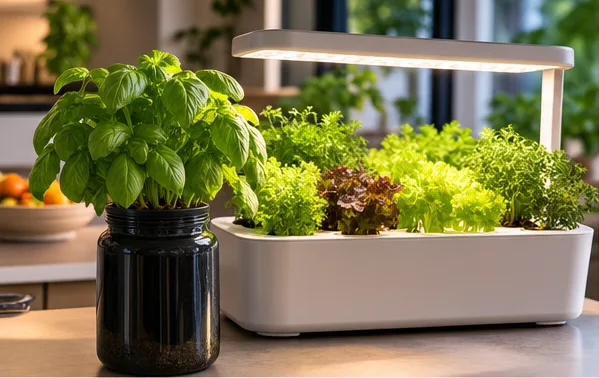
Starting budget: how much does hydroponics cost, and should you buy a ready-to-use indoor garden?
A jar on a windowsill, a DIY setup under an LED, or a ready-made indoor garden: what each costs to buy and over a year, electricity and refills included. The six things to check before buying a kit, a calculator to compare two options, and the mistakes that blow the budget.
The grow log, online
Six parts, a common thread
 I
Understand
See the system the way the plant experiences it: a root that bathes, breathes, and depends on you.
6 articles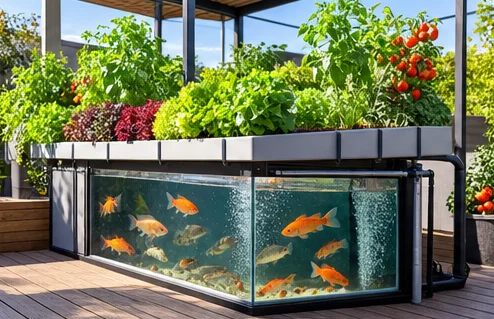 II
Design
A setup you can check, isolate, clean and repair without taking everything apart.
11 articles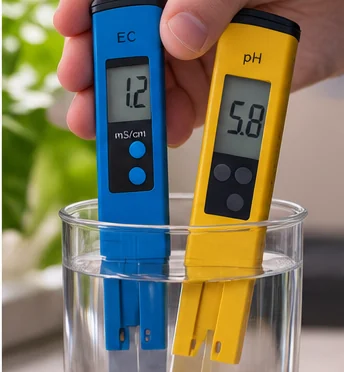 III
Water and nutrients
The nutrient solution is the real soil of your garden.
10 articles IV
Grow
Sow little but often, and put each plant in the system that suits it.
18 articles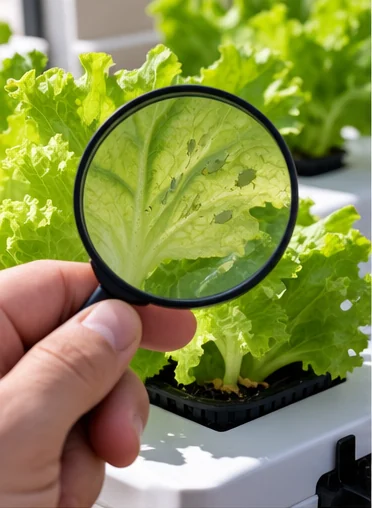 V
Care
Five minutes a day saves hours of catching up.
7 articles VI
Monitor and beyond
Your data, not marketing promises, will tell what deserves its place.
6 articlesFollow the thread, from root to harvest.
Crop guides
What to put in where
EC, pH, recommended system and calendar. The “n/a” entries are deliberate: we don’t force a number that hasn’t been published.

Lettuce
- EC
- 1.2–1.8
- pH
- 6.0–7.0
- Cycle
- 30-35 d (protected)

Arugula
- EC
- n/a
- pH
- n/a
- Cycle
- short

Spinach
- EC
- 1.8–2.3
- pH
- 6.0–7.0
- Cycle
- moderate

Swiss chard
- EC
- n/a
- pH
- n/a
- Cycle
- moderate

Corn salad
- EC
- n/a
- pH
- n/a
- Cycle
- moderate

Bok choy
- EC
- 1.5–2.0
- pH
- 7.0
- Cycle
- short

Tatsoi
- EC
- n/a
- pH
- n/a
- Cycle
- short

Kale
- EC
- n/a
- pH
- n/a
- Cycle
- long
The forum
Got a question? Measure, then ask.
Starting with a jar, setting an NFT slope, printing a tower, understanding a yellow leaf: members help each other, with photos and measurements to back it up.
Tip of the day
EC rising? Top up with plain water. Between solution changes, if EC rises, the plants are drinking more water than they take up nutrients: top off with plain water. If it drops, top off with solution.