Part I · Understand
Tomato species and varieties: from wild tomatoes to oxhearts, which ones to choose for hydroponics
Functional diagram, not to scale.
Wild species, fruit types, determinate, indeterminate or dwarf growth habit, heirloom varieties or F1 hybrids: a guide to finding your way and choosing tomatoes that will thrive in a tower, a Dutch bucket or a large reservoir.
There are thousands of tomato varieties, from the tiny wild currant tomato to the 500 g (1 lb) oxheart. In hydroponics, the choice is not made first on color or taste, but on the growth habit of the plant and the size of the fruit: that is what decides whether it will fit in your system, under your light.
The species: a large wild family
The Tomato Genetics Resource Center at the University of California, Davis, which holds the largest collection of wild tomatoes, recognizes about fifteen species around the cultivated tomato, all native to western South America and the Galápagos. One simple criterion separates them: the color of the inside of the ripe fruit.
| Group | Species | Worth knowing |
|---|---|---|
| Red fruit | S. lycopersicum (cultivated tomato and cherry tomato, var. cerasiforme), S. pimpinellifolium (currant tomato) | The currant tomato is grown in vegetable gardens: tiny, very flavorful, vigorous. |
| Orange or yellow fruit | S. cheesmaniae, S. galapagense | Endemic to the Galápagos Islands; studied for their salt tolerance. |
| Fruit green when ripe | S. peruvianum, S. chilense, S. habrochaites, S. pennellii, S. arcanum, S. chmielewskii, S. neorickii, S. corneliomulleri, S. huaylasense | A reservoir of genes for disease and stress resistance, used by plant breeders. |
| Close relatives | S. lycopersicoides, S. sitiens, S. juglandifolium, S. ochranthum | Neighboring species, rarely crossable with the tomato. |
Many of the resistances you read on seed packets today come from these wild species, patiently crossed with the cultivated tomato.
Growth habit: the real question in hydroponics
| Habit | Behavior | In hydroponics |
|---|---|---|
| Dwarf (micro tomatoes) | A foot or two tall (a few dozen centimeters), stocky stem | Large reservoir, tower with large net cups, very bright windowsill. The beginner’s choice. |
| Determinate | The stem ends in a flower cluster and stops; often around 1 meter (3 ft); harvest concentrated over a few weeks | Dutch bucket or large reservoir; little or no pruning, a short stake. |
| Semi-determinate | In between: vigorous side shoots that end in a flower cluster | Dutch bucket; light pruning. |
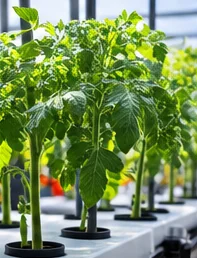
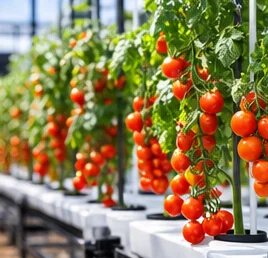
| Indeterminate | Grows and flowers without stopping; can exceed 2 meters (6.5 ft) | Dutch bucket or grow bag, trained to a single stem, string trellising, regular pruning. |
Fruit types
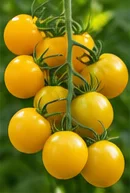
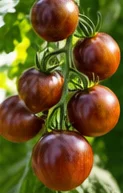
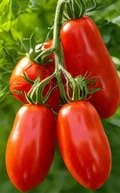
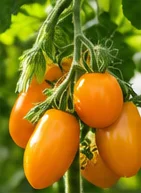
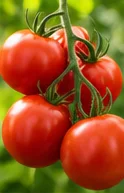
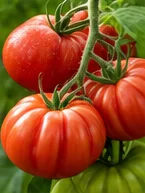
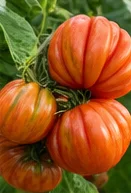
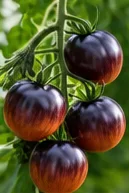
| Type | Typical weight | Examples of open-pollinated varieties | Difficulty in hydroponics |
|---|---|---|---|
| Currant | 1 to 2 g | Red currant tomato | Easy, but a sprawling plant |
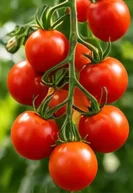
| Cherry and cocktail | 10 to 30 g | Yellow Pear, Black Cherry, Maskotka (dwarf) | Easy |
| Elongated, paste | 50 to 120 g | Roma, San Marzano, Andine Cornue | Medium: prone to blossom end rot |
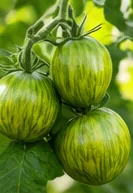
| Round, slicing | 80 to 200 g | Marmande, Rose de Berne, Green Zebra | Medium |
| Oxheart, ribbed | 250 g and up | Oxheart (Cœur de Bœuf), Black Krim, Brandywine | Hard: light, pollination, cracking |
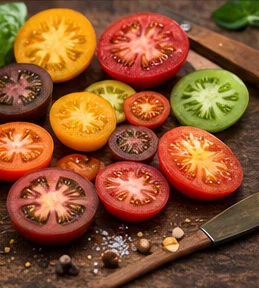
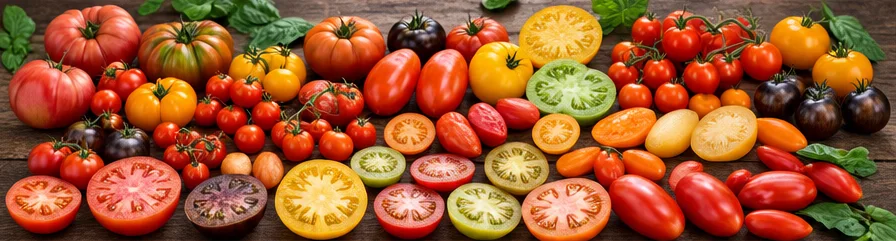
Colors (red, pink, yellow, orange, black, green when ripe, bicolor) are mostly a matter of taste. “Black” and pink tomatoes often have thinner skin: more tender, they crack more easily when watering or the nutrient solution fluctuates.
Heirloom, open-pollinated or F1 hybrid?
- Heirloom and open-pollinated varieties: a diversity of shapes and flavors, seeds you can save, replant and swap. Yields sometimes uneven, few resistances.
- F1 hybrids: uniform plants, often vigorous, with resistances listed on the packet. This is what most commercial hydroponic greenhouses grow. Their seeds do not produce the same plant again.
- Grafting: growers often graft a flavorful variety onto a vigorous, resistant rootstock. Useful in a growing medium over a long season, rarely needed at home.
Our picks for beginners
| Your system | Recommended tomato | Why |
|---|---|---|
| Indoor kit, windowsill | Dwarf micro cherry tomato | Fits under a kit LED; do not expect big harvests. |
| Large DWC reservoir on a patio | Determinate or dwarf cherry | Compact, makes do with a stake, produces quickly. |
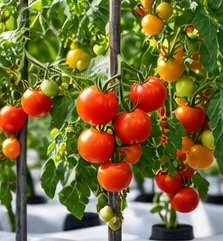
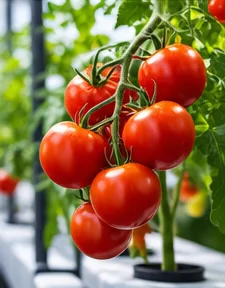
| Dutch bucket in a greenhouse or in full sun | Indeterminate cherry, then round slicing | A long harvest if you prune and trellis. |
| Experienced grower, good light | Oxheart, elongated paste | For a challenge: keep a close eye on calcium, EC and pollination. |
Want to try a rare variety? Check out the forum’s seed swap. Step-by-step growing is covered in Growing tomatoes hydroponically, and the dwarf cherry tomato crop guide sums up the settings.
Frequently asked questions
Which tomato should I choose to start out in hydroponics?
A dwarf or determinate cherry tomato: a compact plant, light fruit, a quick harvest. It fits in a large reservoir or a Dutch bucket and is more forgiving of a lack of light than a large slicing tomato.
What is the difference between a determinate and an indeterminate tomato?
A determinate tomato stops growing when its stem ends in a flower cluster: it stays compact and produces over a short period. An indeterminate tomato keeps growing and flowering as long as conditions allow: it is trained to a single stem, trellised and pruned.
Can you grow an oxheart tomato hydroponically?
Yes, in a Dutch bucket or a grow bag, with sturdy trellising, plenty of light and good pollination. It is not a beginner’s variety: heavy fruit, prone to deformities when it is cool and to cracking.
- Tomato Genetics Resource Center (UC Davis), Taxonomic Key to the Tomato Species
- Oregon State University Extension, Grow your own tomatoes and tomatillos (EC 1333)
- Virginia Cooperative Extension, System and Crop Comparisons (SPES-466)
- Oklahoma State University Extension, Electrical Conductivity and pH Guide for Hydroponics (HLA-6722)