Part I · Understand
Beans, Peas and Fava Beans in Hydroponics: Can You Grow Them, and Which Ones to Choose?
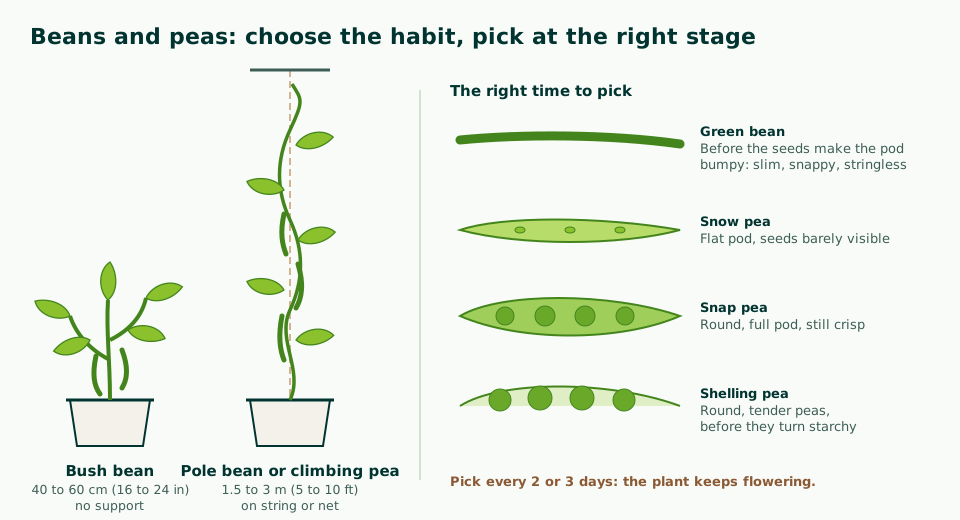
Functional diagram, not to scale.
Yes, legumes grow very well without soil. Bush or pole beans, snow peas or sugar snap peas, fava beans, edamame, yardlong beans: what works, what works less well, and which system to choose for each.
Hydroponics is usually associated with lettuce, herbs and tomatoes. Yet beans and peas grow very well without soil, and researchers grow beans hydroponically precisely in order to study them. This five-article series takes you from seed to plate: choosing, sowing and growing, adjusting the solution, harvesting and storing, and all our tips.
The legume family

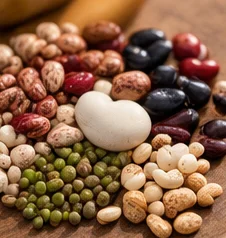
Beans, peas, fava beans, soybeans, lentils, chickpeas: they all belong to the Fabaceae, or legume, family. Their fruits are pods, and their roots host bacteria (rhizobia) that can fix nitrogen from the air in small balls called nodules. In the ground, that is free fertilizer; in hydroponics, the solution already supplies nitrogen, and fixation matters much less (see the article on the solution).
Warm or cool: two sets of needs
| Beans (Phaseolus), edamame, cowpeas | Peas, fava beans | |
|---|---|---|
| Climate | Warmth: don’t start them in the cold, seeds rot in a cold growing medium | Cool: 13 to 18 °C (55 to 64 °F) is ideal, production stops above about 29 °C (84 °F) (University of Minnesota) |
| Season in Belgium | Late May to September outdoors; year-round under LEDs in a warm room | Spring and fall; under LEDs in a cool room |
| Main risk | Flowers drop in strong day and night heat | Production stops with the first hot spell |
Legumes in hydroponics at a glance
| Crop | Habit | Recommended system | Harvest | Verdict |
|---|---|---|---|---|
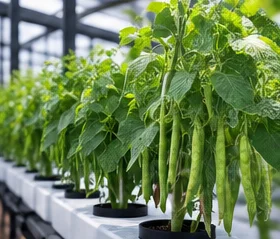
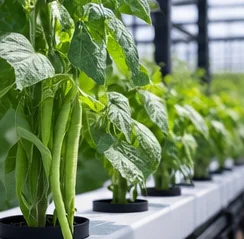
| Bush green bean | 40 to 60 cm (16 to 24 in) | Large DWC tub, Dutch bucket, tower with large cups | Concentrated over a few weeks | Very good choice |
| Pole bean | Up to 2 m (6.5 ft) and more | Dutch bucket with string or netting | Spread over months | Very productive, plan for the height |
| Snow pea, sugar snap pea | Bush (60 to 90 cm, 24 to 35 in) or climbing (up to 1.5 m, 5 ft) | Tub, Dutch bucket, netting | About 60 days after sowing | Excellent in cool conditions |
| Shelling pea | Same | Same | Same | Possible, but few peas per plant |
| Pea shoots | A few centimeters | Tray, grow mat, shallow Kratky | 2 to 3 weeks | The best first try |
| Fava bean | 80 cm to 1.2 m (31 in to 4 ft), stiff stem | Dutch bucket or large tub | Spring | Possible; keep cool; watch out for black aphids |
| Edamame (green soybean) | 60 to 80 cm (24 to 31 in) | Large tub, Dutch bucket | Concentrated | For the curious; needs heat and light |
| Yardlong bean, cowpea | Climbing, very vigorous | Dutch bucket, warm greenhouse | Long | Spectacular if very warm |
| Dry beans, chickpeas, lentils | Varies | Any | Once, dry seeds | Poor return: lots of space for few seeds |

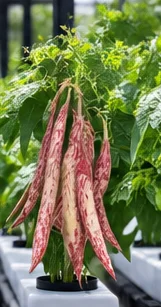

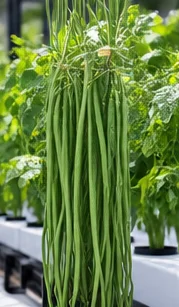
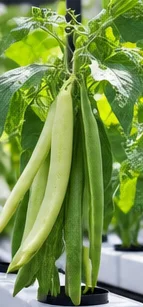

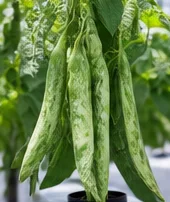
Our picks for beginners
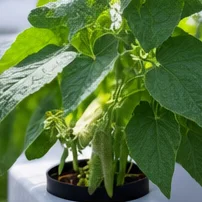
- Pea shoots on a tray: fast, easy, delicious.
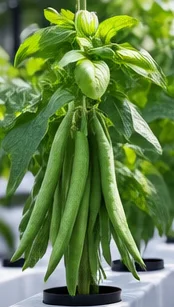
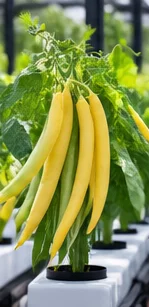
- Bush green beans in a large tub, somewhere warm, under good light.
- Bush snow peas in spring or fall, in a cool room.
- Then, with enough ceiling height or a greenhouse: pole beans, for harvests that last for months.
Next in the series: sowing and growing.
Frequently asked questions
Can you grow beans hydroponically?
Yes. Beans grow well in hydroponics: they are even used in research in these systems. Ideally choose a bush variety for a tub or tower, or a pole variety in a Dutch bucket with a string. They need warmth, plenty of light and a “fruiting crop” type solution.
Do legumes fix nitrogen in hydroponics?
They can, thanks to the bacteria in their root nodules (rhizobia), but a nitrogen-rich solution slows that fixation. A 2023 Greek study showed that by cutting nitrogen by half and then by a quarter and adding rhizobia, beans fixed significantly more nitrogen with a limited loss of yield. At home, stick with a complete solution.
Which legume should a beginner start with?
Pea shoots, ready in two to three weeks on a tray, then bush green beans in a large tub. Snow peas come next, in spring or fall, when it is cool.
- University of Minnesota Extension, Growing beans in home gardens
- University of Minnesota Extension, Growing peas in home gardens
- Oklahoma State University Extension, Electrical Conductivity and pH Guide for Hydroponics (HLA-6722)
- Karavidas et al., Hydroponic Common-Bean Performance under Reduced N-Supply Level and Rhizobia Application, Plants, 2023