Part III · Water and nutrients
pH and EC: the two numbers to track
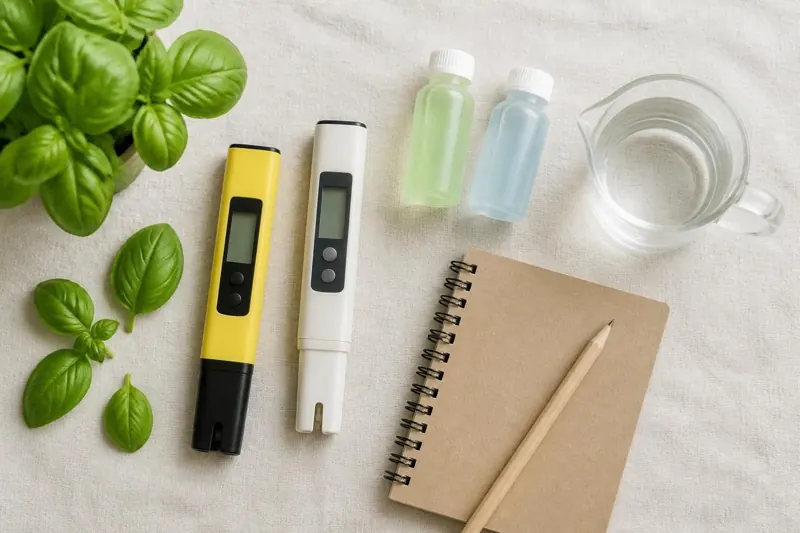
EC tells you how much, pH tells you whether the plant can use it. Two measurements, one order to follow: EC first, pH second.
EC: how much
Electrical conductivity (mS/cm) measures how well the solution conducts electricity. It is an indicator of the overall concentration of ions… but it does not tell you which ions are present.
pH: available or not
pH affects nutrient availability. Too high, and iron and micronutrients get locked out; too low, and some become excessive. Without soil, there is little buffering: pH moves fast.
Mix a nutrient solution
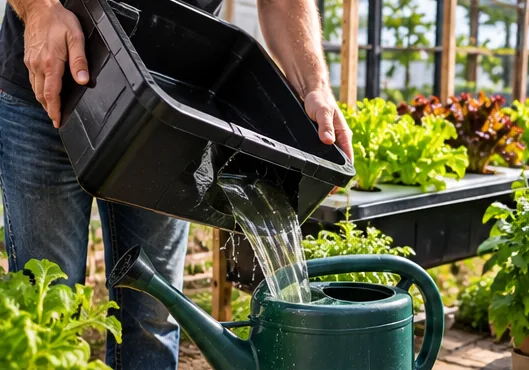
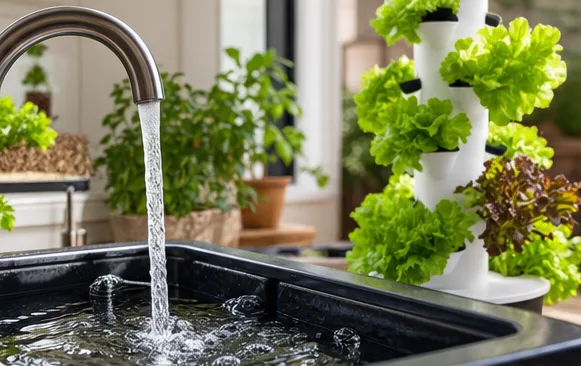
- Fill the reservoirTap water or filtered rainwater. Write down the exact volume.
- Measure the raw waterpH and EC before adding anything: this is your baseline.
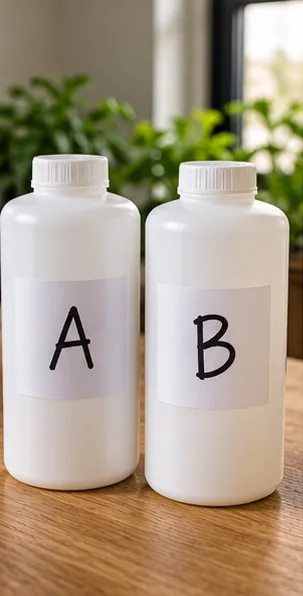
- Add part AManufacturer's dose, diluted in the reservoir. Stir.
- Add part BSeparately, never A and B together while concentrated. Stir.
- Mix thoroughlyRun the pump for 10 to 15 minutes.
- Adjust ECToward the range for the crop in that system.
- Then adjust pHIn small doses of pH Down / pH Up, measuring between each addition.
- Log everythingDate, volume, EC, pH, temperature.
Calibrate the pH meter
- Rinse the probeDistilled water, without rubbing the bulb.
- pH 7 bufferDip, wait for the reading to settle, confirm.
- Rinse againTo avoid cross-contaminating the buffers.
- pH 4 bufferDip, let it settle, confirm.
- StoreIn its storage solution, never dry.
Frequently asked questions
What pH should I use in hydroponics?
The common working range is 5.5 to 7.0, but each crop has its own range: lettuce 6.0 to 7.0, basil 5.5 to 6.0, strawberry 6.0 (Oklahoma State HLA-6722). Set it per system, based on the crop.
Should I adjust EC or pH first?
EC first: adding nutrients changes the pH. Once the concentration is reached, correct the pH with small doses of pH Down or pH Up, measuring between each addition.
How often should I calibrate a pH meter?
About every two weeks, with pH 7 then pH 4 buffers, and always store the probe in its storage solution.