Equipment
Hydroponic growing media: rockwool, coco coir, clay pebbles, perlite and the rest
Rockwool, coco coir, perlite, vermiculite, clay pebbles, peat, seed-starting foam, gravel: how much water and air each growing medium holds, its starting pH, how to prepare it, which system to use it in, whether it can be reused, and its environmental impact.
In hydroponics there is no soil, but there is almost always a little growing medium: a cube to germinate the seed, pebbles to hold the plant in place, sometimes a whole tub of coco coir. Each one holds more or less water and air, starts from a different pH, and is prepared and recycled in its own way. Here is what you need to choose without getting it wrong.

1. What is a growing medium for?
- Holding the plant upright in its net cup or tub.
- Retaining a little water around the roots, between waterings or if the pump stops.
- Letting air through: a root that cannot breathe rots, and Pythium loves waterlogged media (Penn State).
- Staying inert: not changing the pH or EC of the solution, not decomposing.
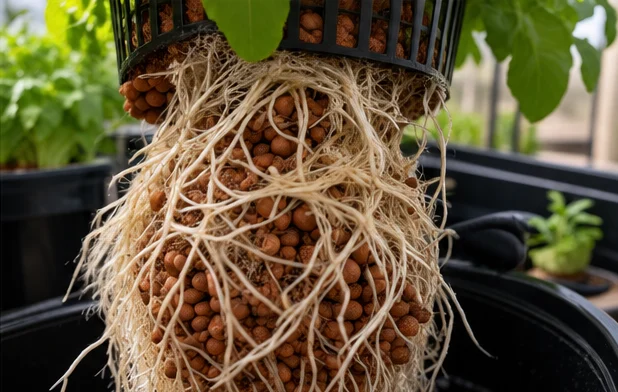
Depending on the system, its role changes completely: in DWC or Kratky, the roots sit in water and the growing medium comes down to a seed-starting cube and a few pebbles. In a drip-irrigated tub, it is the medium that acts as the reserve.
2. Growing media compared
| Growing medium | Strengths | Weaknesses |
|---|---|---|
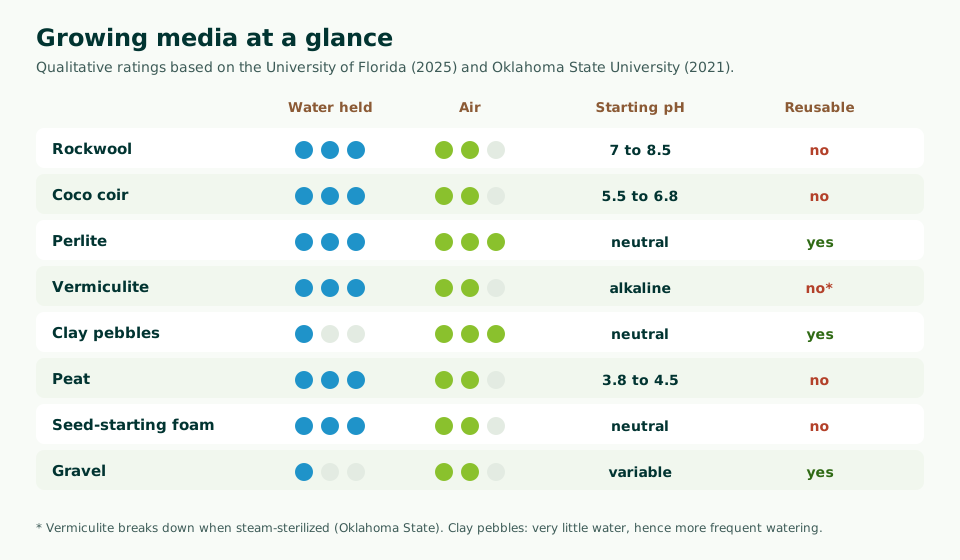
| Rockwool | Holds a lot of water and keeps 18 to 25% air (Oklahoma State); ready-to-use cubes and slabs | Starting pH of 7 to 8.5 to correct; not biodegradable, waste that is hard to dispose of; algae on the surface (University of Florida) |
| Coco coir | Holds water while staying airy; pH 5.5 to 6.8; renewable resource | Salts to rinse out; high in sodium and chloride, added calcium and magnesium recommended (Oklahoma State); can clog recirculating systems |
| Perlite | Very airy, holds three to four times its weight in water; neutral, sterile, reusable after steam pasteurization | Light, washes away in ebb and flow; irritating dust (mask); algae |
| Vermiculite | Excellent water retention, useful in mixes for seedlings | Alkaline; too wet on its own; dust, possible traces of asbestos (Oklahoma State); breaks down when steamed |
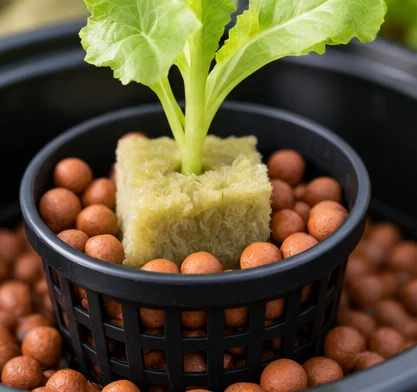
| Clay pebbles | Lots of air, drain fast, neutral pH (7), stable and reusable for years | Almost no water: frequent watering; expensive; float at first and can clog filters; roots cling to them |
| Peat | Holds up to ten times its dry weight in water | Very acidic (pH 3.8 to 4.5), needs liming; peat bog extraction is not sustainable; hard to rewet |
| Seed-starting foams | Hold water well, neutral, clean | Break down over time: not for long crops; not reusable |
| Gravel, sand | Reusable, cheap | Heavy; avoid limestone gravel, which releases calcium carbonate (University of Florida); sand sometimes contains clay |
Sources: University of Florida, Common Media Used in Hydroponics (2025); Oklahoma State University, Soilless Growing Mediums (2021).
3. Which growing medium for which system?
| System | Seedlings | In the net cup or tub |
|---|---|---|
| Kratky, DWC, raft | Rockwool or foam cube | Clay pebbles to hold the plant, or nothing |
| NFT, gutters | Rockwool or foam cube | The cube alone, perhaps a few pebbles |
| Vertical towers | Cube | Clay pebbles or a small coco basket, depending on the model |
| Ebb and flow | Cube | Clay pebbles: they drain fast and no longer float once washed |
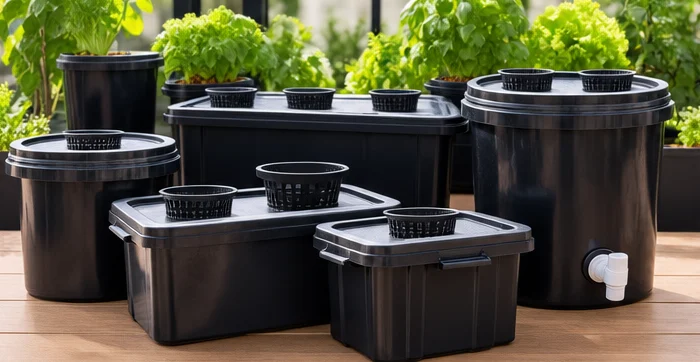
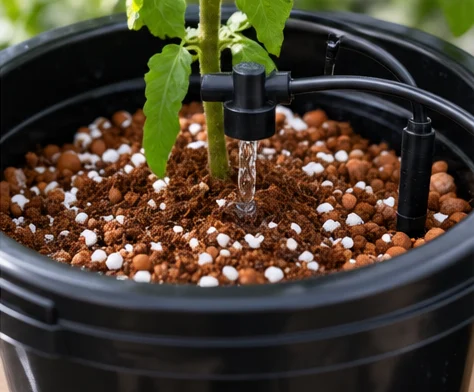
| Drip-irrigated tubs and buckets | Cube or coco and perlite mix | Coco, coco and perlite, perlite, or rockwool slabs |
| Microgreens | Hemp, jute or coco mat, or a thin sheet of rockwool | See microgreens |
4. Preparing before sowing
Preparing the four most common growing media
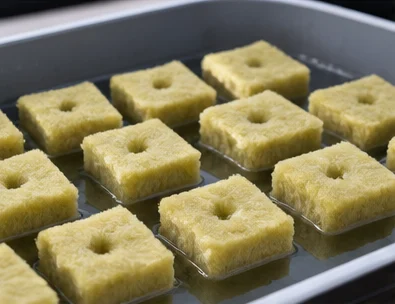
- Rockwool: condition itSoak the cubes in water adjusted to around pH 5.5 to 6.0 until they are saturated, then drain without squeezing. Oklahoma State University recommends this acidified soak because of the high starting pH.
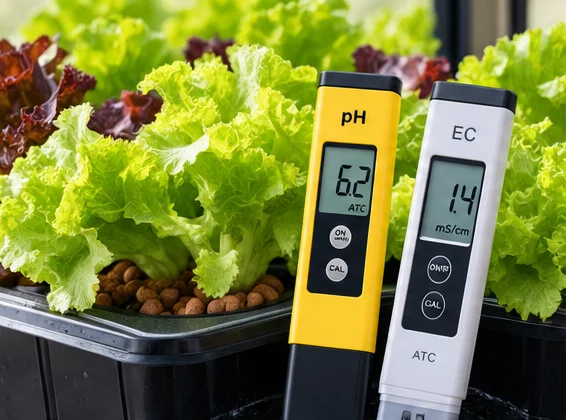
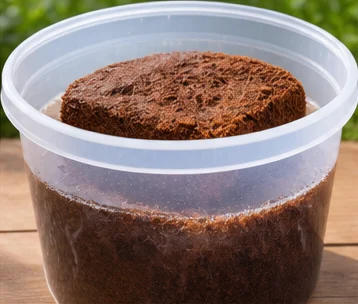
- Coco coir: rehydrate and rinseA compressed brick expands up to six times its volume in water (Oklahoma State). Then rinse thoroughly to wash out the salts, until the runoff water has a low EC.
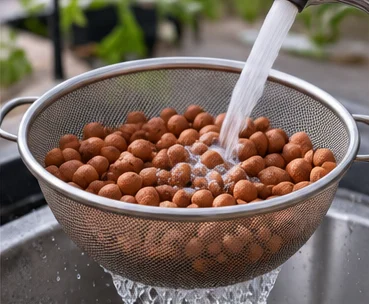
- Clay pebbles: wash themRinse several times in a bucket until the water stays clear: clay dust clogs pumps and drippers. Soaking them overnight often helps limit their tendency to float at first.
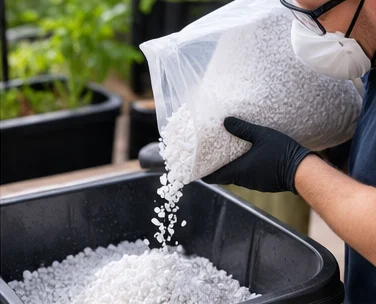
- Perlite: moisten itWater the bag before opening it wide or pouring: the dust stays down. A mask is recommended for large quantities (University of Florida).
5. Reuse and recycling
- Clay pebbles: washed and disinfected between crops, they last for years (Oklahoma State). Remove the roots, soak, rinse.
- Perlite: reusable after steam pasteurization (Oklahoma State); at hobby scale, it often ends up mixed into the compost at the end of its life.
- Rockwool: its structure lasts three to four years and it can be steam-sterilized in commercial production (Oklahoma State), but it is not biodegradable: disposing of it is a problem (University of Florida). Limit it to seed-starting cubes.
- Coco coir, foams, peat: not reused; coco and peat end up in the compost.
6. Common mistakes
| Mistake | Consequence | The fix |
|---|---|---|
| Unconditioned rockwool | High pH around young roots, slower germination | Soak in water at around pH 5.5 to 6.0 |
| Unrinsed coco | High EC, sodium, burned seedlings | Rinse until the EC is low, add calcium and magnesium |
| Unwashed pebbles | Dust in the pump and drippers | Rinse until the water runs clear |
| Medium waterlogged all the time | Lack of air, root rot | Let it drain between waterings, leave an air gap in DWC |
| Limestone garden gravel | pH that keeps creeping up | Non-limestone gravel or clay pebbles |
| Potting soil in a recirculating system | Clogged pumps, soil organisms | Inert growing media only |
To go further: sowing and transplanting, diseases and pests, and your growing media trials on the forum.
Frequently asked questions
Which growing medium should I start with?
Rockwool or foam cubes for seedlings, then clay pebbles to hold the plants in the net cups. It is simple, clean, and the pebbles can be reused.
Do I really need to soak rockwool?
Yes: its starting pH is 7 to 8.5. Oklahoma State University recommends conditioning it by soaking it in an acidified solution, to bring it down to around 5.5 to 6.0 before sowing or transplanting.
Can clay pebbles be reused?
Yes, that is their big advantage: washed and disinfected between crops, they last for years according to Oklahoma State University. Remove the roots thoroughly, as they cling to the pebbles.
Can potting soil be used in hydroponics?
No: it breaks down, clogs pumps and brings in soil organisms. For seedlings, use rockwool cubes, foam cubes or a coco and perlite mix instead.
Is vermiculite dangerous?
Its dust is irritating to breathe (University of Florida), and Oklahoma State University notes that it may contain traces of asbestos. Moisten it before handling, work outdoors or wear a mask, and choose perlite or coco when you can.