Part V · Care
Pests and diseases in hydroponics: prevent, identify, treat
Root rot, powdery mildew, basil downy mildew, aphids, whiteflies, thrips, spider mites, fungus gnats: where to look for them, how to recognize them, the habits that prevent them, the beneficial insects that eat them, and what to do when the roots turn brown.
The good news: without soil, many garden diseases and pests stay behind. The bad news: the ones that remain move fast, and the most dangerous one hides underwater. Here is how to recognize them, prevent them, and react without wrecking anything when they show up.
1. Where to look
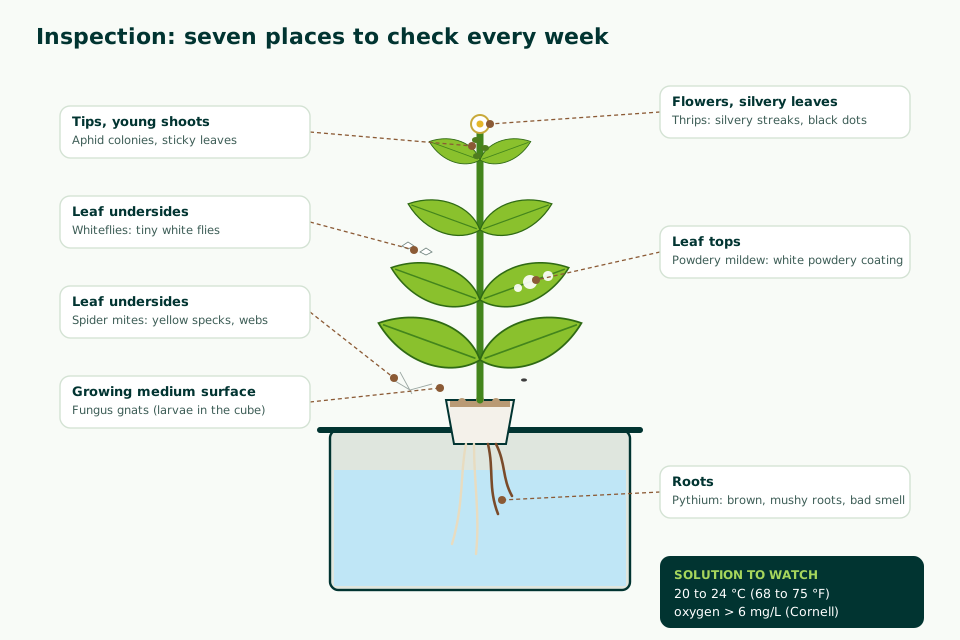
Each problem has its own territory. Aphids like tender tips, whiteflies and spider mites the undersides of leaves, thrips the flowers, powdery mildew the tops of leaves, fungus gnats the damp surface of the growing medium. And rot attacks the roots, where nobody looks.
2. Prevention: the habits that keep trouble away
- Healthy plants and seeds: inspect every new plant and keep it apart for a few days. Cornell notes that an outbreak of basil downy mildew was traced to contaminated seed.
- Clean equipment: Penn State lists poorly cleaned tools, pots and trays among the ways Pythium gets in. Reservoirs, net pots and tubing are cleaned and disinfected between two crops; used growing medium is not reused.
- Clean water: pond or stream water can contain Pythium (Penn State). Use mains water, rainwater filtered and stored under cover, or treated water.
- A cool, aerated solution: 20 to 24 °C (68 to 75 °F) and more than 6 mg/L of dissolved oxygen (Cornell). Air pump and air stone, reservoir in the shade, never a solution sitting stagnant in the sun.
- Dry leaves: Oklahoma State warns that water splashing onto the leaves of a tower encourages fungal diseases.
- Moving air: a small fan, plants spaced out, no foliage crammed against a wall or a window.
- No fungus gnats: their larvae and shore flies can carry Pythium from one reservoir to another (Penn State). Avoid growing media that are soggy on the surface.
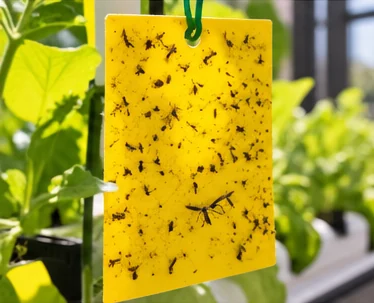
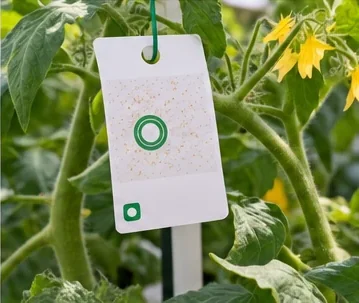
- Yellow sticky traps near the plants: they reveal the first whiteflies, winged aphids and gnats before you see them on the leaves.
3. Underwater: root rot
Pythium is a fungus-like organism that lives in water and attacks roots. It is the main enemy of hydroponics, and Penn State calls it a real threat to these crops.
| What you see | What it means |
|---|---|
| Plants that wilt in the heat of the day and perk up in the evening | The roots can no longer keep up with water demand (Penn State, Cornell) |
| Brown, mushy roots, whose outer layer slips off and leaves a central thread, the “rat tail” | Rot has set in |
| Yellow leaves, stunted growth | Damaged roots no longer absorb enough |
| Unpleasant smell from the reservoir | Solution too warm, too old or poorly oxygenated |
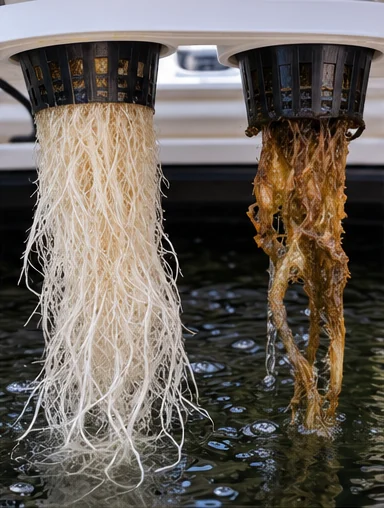
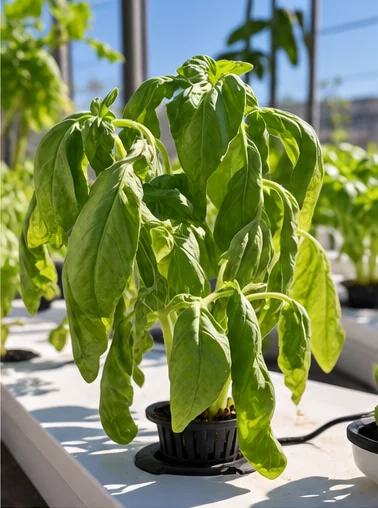
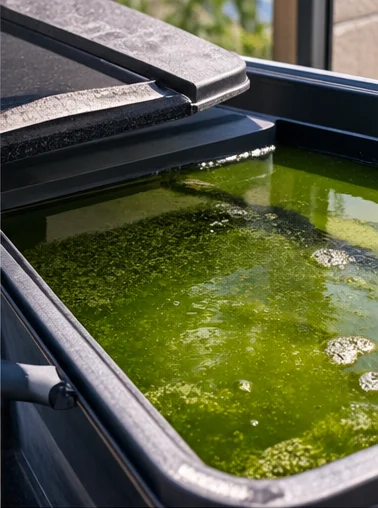
Cornell recommends keeping the root zone between 20 and 24 °C (68 and 75 °F): its researchers reduced Pythium by cooling the water to around 20 °C (68 °F). Dissolved oxygen should stay above 6 mg/L, ideally 8 to 9. A warm solution holds less oxygen: summer is the risky season.
Brown roots: the rescue plan
- IsolateRemove the plants with brown, mushy roots right away (Cornell): they contaminate the others.
- DrainAll of the solution goes, onto a lawn or into the compost, away from other crops.
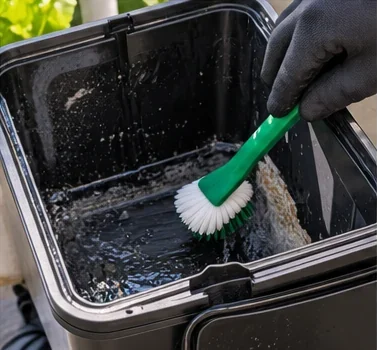
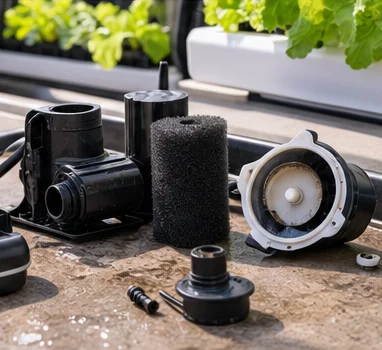
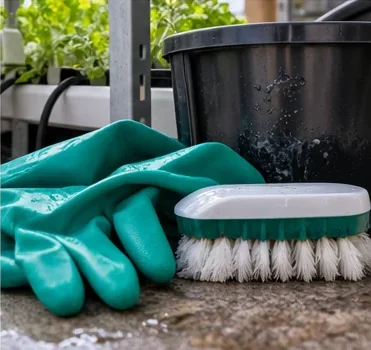
- CleanReservoir, pump, tubing, net pots: scrub, rinse, disinfect with something compatible with the materials, then rinse thoroughly. Throw out the growing medium of the sick plants.
- Fix the causeReservoir in the shade, insulated, larger; air pump and air stone or circulation; in summer, frozen water bottles or a chiller to get back to around 20 to 24 °C (68 to 75 °F).
- RestartFresh solution, normal dose, pH adjusted. Plants that stayed healthy often grow white roots again within a few days.
- MonitorRoots, temperature and smell every day for two weeks.
4. On the leaves: powdery mildew, downy mildew, gray mold
| Disease | Signs | Conditions | What to do |
|---|---|---|---|
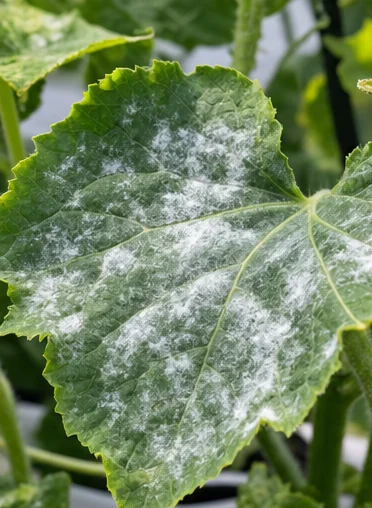
| Powdery mildew | White powdery coating on the tops of leaves | Stale air, crowded plants, day-night swings | Remove affected leaves, space out, ventilate |
| Basil downy mildew | Yellowing in patches bounded by the large veins, grayish fuzz underneath | Wet leaves or humidity of at least 85% (Cornell) | Remove affected plants, ventilate, do not wet the foliage, resistant varieties (DMR) |
| Gray mold (botrytis) | Soft spots covered with gray fuzz, rotting flowers and fruit | Humidity, wounds, dead leaves left in place | Clean up, remove affected parts, ventilate |
| Damping-off | Seedlings that collapse at the base of the stem | Soggy growing medium, heat, Pythium | Sow clean, water less, ventilate |
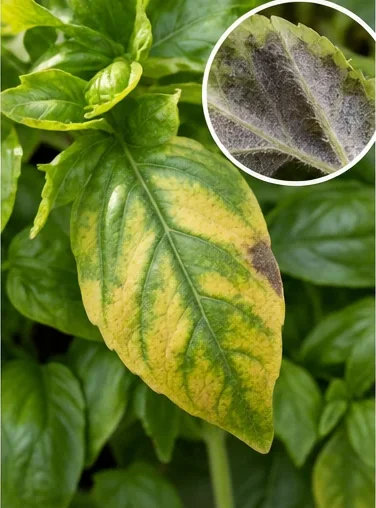
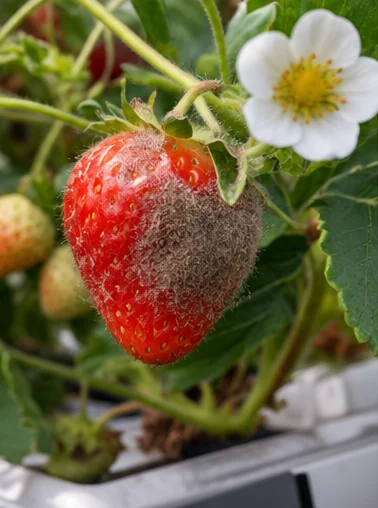
For downy mildew, Cornell also recommends keeping leaves moving with fans and has observed that lighting at night slows spore production. See also caring for herbs.
5. Pests
| Pest | How to recognize it | First step |
|---|---|---|
| Aphids | Green, black or gray colonies on the tips, sticky and distorted leaves | Spray of water, infested tips cut off |
| Whiteflies | Tiny white flies that take off when you touch the plant, on leaf undersides | Yellow traps, heavily infested lower leaves removed |
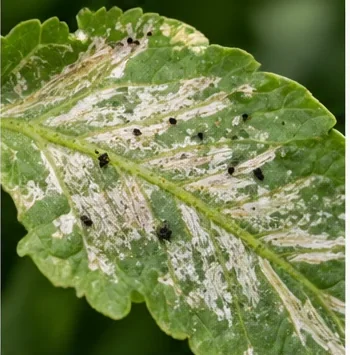
| Thrips | Silvery streaks on the leaves, small black dots, damaged flowers | Blue or yellow traps, affected flowers removed |
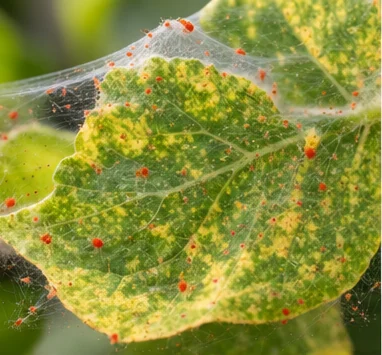
| Spider mites | Leaves speckled with yellow, fine webs, hot dry air | Shower the foliage, humidify the air, isolate |
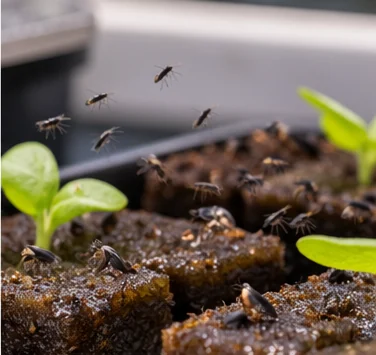
| Fungus gnats | Small black gnats around the cubes and the damp growing medium | Drier medium surface, yellow traps |
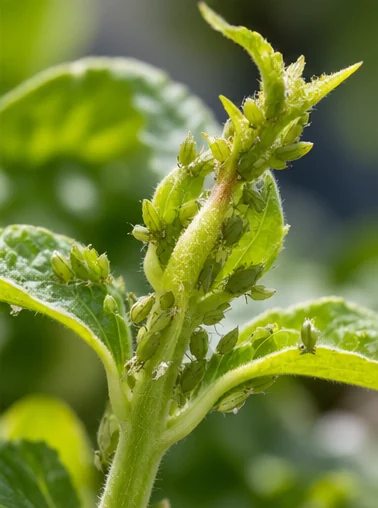
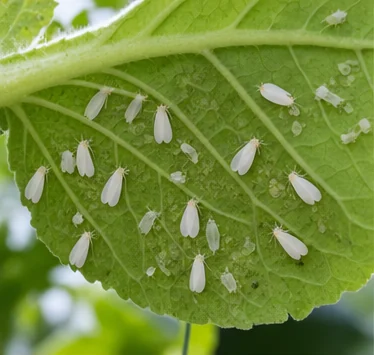
6. Beneficial insects: living allies
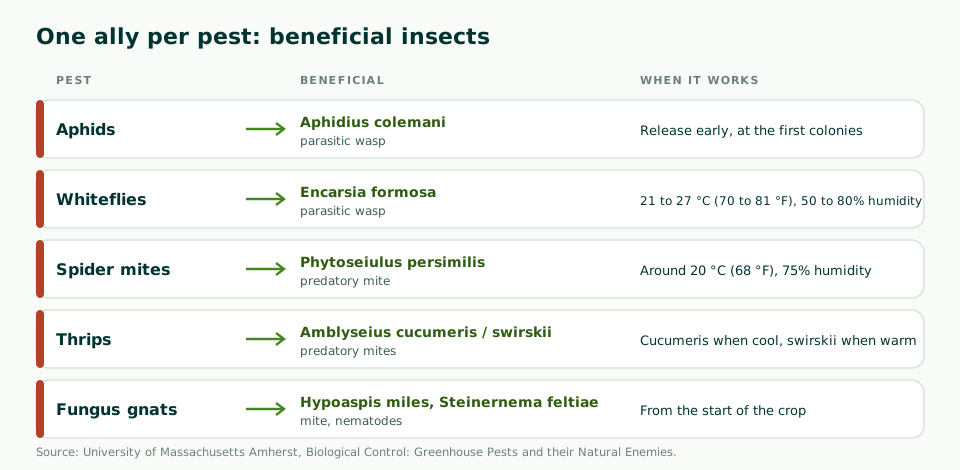
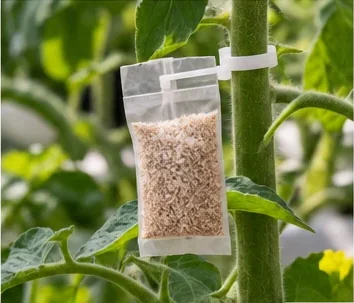
In a greenhouse, a sunroom or a grow room, beneficial insects are the most effective solution and the safest for your harvests. The University of Massachusetts gives a few keys:
- Release early: as soon as the first pests are spotted, not once everything is overrun.
- Respect their climate: Encarsia formosa works best between 21 and 27 °C (70 and 81 °F) and 50 to 80% humidity, and stops flying below about 18 °C (64 °F); Phytoseiulus persimilis prefers about 20 °C (68 °F) and 75% humidity; Amblyseius cucumeris suits cool conditions, A. swirskii warm ones.
- Take down the sticky traps for a few days after releasing parasitic wasps: they would catch them too.
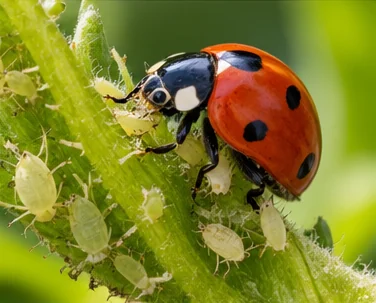
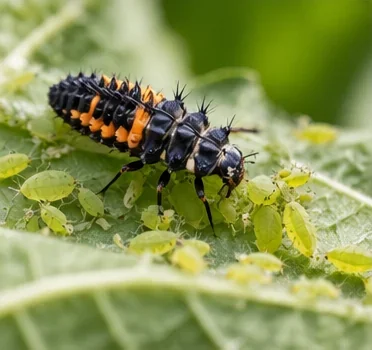
- Parasites rather than predators against aphids: parasitic wasps generally do better than ladybugs in an enclosed space.
7. Treating safely
- Never anything in the reservoir: the solution feeds the roots; a product poured into it goes everywhere, right into the harvest.
- Mechanical steps first: spray of water, leaves and tips removed, showering the foliage, traps.
- Only then a product, and only one approved for home garden use and for the crop in question (in Belgium, the list is on Phytoweb), respecting the pre-harvest interval.
- In aquaponics: nothing that could reach the fish. Beneficials and mechanical steps only (see aquaponics).
- Protect the beneficials: a poorly chosen treatment kills your allies too.
8. The inspection routine
Inspect your crops in 10 minutes
- The yellow trapHow many insects, which ones? Write it down: a rise signals an attack.
- The tipsAphids, sticky or distorted leaves.
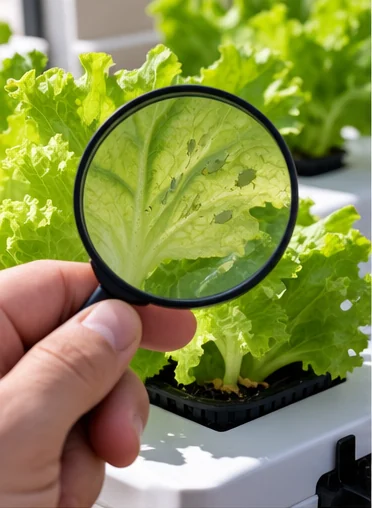
- The undersides of five leavesWhiteflies, spider mites, downy mildew fuzz. A magnifying glass helps a lot.
- The flowersThrips, gray mold.
- The tops of the leavesWhite spots of powdery mildew, yellowing.
- The growing mediumGnats, soggy surface, algae.
- The rootsLift a net pot: white and firm, all is well; brown, see part 3.
- The solutionTemperature, smell, color, on top of the usual pH and EC.
Unsure about a symptom? The diagnosis method helps you sort things out, and the deficiency table in the article on nutrients keeps you from confusing a deficiency with a disease.
9. Common mistakes
| Mistake | Consequence | The fix |
|---|---|---|
| Reservoir in the sun in summer | Warm, oxygen-poor solution: Pythium | Shade, insulation, air pump and air stone, 20 to 24 °C (68 to 75 °F) |
| Keeping a sick plant “just to see” | The whole system gets contaminated | Isolate or discard immediately |
| Reusing growing medium without cleaning it | The disease comes back with the next crop | New growing medium, disinfected equipment |
| Wetting the foliage | Downy mildew, powdery mildew, gray mold | Water the roots, not the leaves |
| Treating before identifying | Useless product, beneficials killed | Inspection, magnifying glass, trap, then decide |
| Pouring a product into the solution | Damaged roots, residues in the harvest | Never in the reservoir |
| Releasing beneficials too late | They are overwhelmed | As soon as the first pests are spotted |
Photos of your problems and your successes: the Diagnosis forum helps you identify the culprit.
Frequently asked questions
Why are my plants’ roots turning brown?
Most often because of root rot, caused by Pythium and encouraged by a solution that is too warm and poorly oxygenated. Cornell recommends keeping the root zone between 20 and 24 °C (68 and 75 °F) and above 6 mg/L of dissolved oxygen, ideally 8 to 9. Remove the affected plants, drain and clean the system, then start again with a fresh, cool, well-aerated solution.
How do you get rid of aphids in hydroponics?
At first, a spray of water and removing the worst-affected tips are enough. In a greenhouse or sunroom, the University of Massachusetts recommends parasitic wasps such as Aphidius colemani, released at the first colonies. Never pour insecticide into the reservoir.
What is the white powder on the leaves?
Probably powdery mildew, a fungus that forms a white coating on the tops of leaves, especially in stale air. Remove the affected leaves, space the plants out and keep the air moving with a small fan.
Can basil downy mildew be cured?
With difficulty: it is better to avoid it. Cornell points out that it needs wet leaves or at least 85% humidity around the plants. Ventilate, space plants out, avoid wetting the foliage, and choose resistant varieties (labeled DMR).
- Penn State Extension, Pythium
- Cornell University (N. Mattson, e-GRO), Pythium root rot on hydroponically grown basil and spinach
- Cornell University, Managing Basil Downy Mildew in the Greenhouse
- University of Massachusetts Amherst, Biological Control: Greenhouse Pests and their Natural Enemies
- Oklahoma State University Extension, Building a Vertical Hydroponic Tower (HLA-6724)