Part V · Care
Pruning, harvesting and caring for your herbs: bushy plants for months
Functional diagram, not to scale.
Pinch basil, cut parsley from the outside, shear chives, slow down cilantro bolting, rejuvenate thyme and rosemary, and diagnose common problems: the care routine for hydroponic herbs.
A well-harvested herb turns into a bush; a badly harvested herb wears itself out in a few weeks. The good news: in hydroponics, harvesting is pruning. The same moves fill your plate and make the plant more productive.
1. The golden rule: one third at most
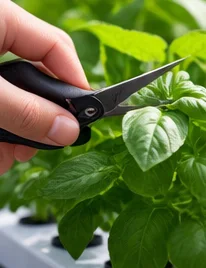
Never take more than a third of the foliage of a herb at once. The remaining leaves feed the regrowth. It’s better to harvest a little every week than everything at once.
2. The right cut, by family

| Herbs | Where to cut | When to start |
|---|---|---|
| Basil, mint, lemon balm, oregano, sage | Above a pair of leaves, keeping 2 or 3 tiers | When the plant has 4 to 5 tiers of leaves, about 15 to 20 cm (6 to 8 in) |
| Parsley, cilantro, chervil | The outer stems, at the base; leave the center | When the clump has 8 to 10 stems |
| Chives | The whole clump, 3 or 4 cm (1 to 1.5 in) above the crown | When the leaves are 15 to 20 cm (6 to 8 in) long |
| Thyme, rosemary | The soft tips of this year’s growth, never into old wood | Once the plant is well established |
| Dill | The outer leaves, then the flower umbels | Plant 20 cm (8 in) tall |
3. The right time of day
The University of Minnesota advises picking in the morning, right after the dew has dried, before the heat, and notes that flavor peaks when the flower buds appear, before they open. Indoors, harvest one to two hours after the LEDs come on.
4. Bolting
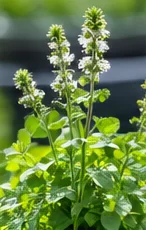
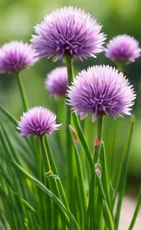
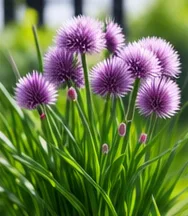
When a herb flowers, it puts its energy into flowers and then seeds: leaves become scarce, smaller, sometimes bitter (cilantro, parsley).
- Basil: pinch off the flower spikes as soon as they show.
- Cilantro, dill: hard to avoid, especially in heat and long days. Harvest often, keep them cool, and resow every 3 to 4 weeks.
- Parsley: it bolts in its second year; replace it.
- Chives: their purple flowers are edible and attract pollinators; cut them back after flowering to restart leaf growth.
- Saving seeds: let one cilantro or dill plant go all the way: homegrown seeds and a spice. See our seed guide.
5. Rejuvenating perennials
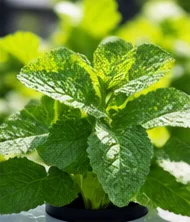
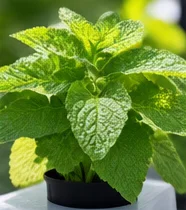
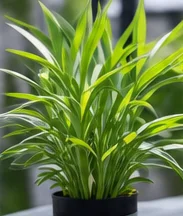
- Thyme, sage, rosemary get bare and woody at the base: prune lightly after each flush of growth, and take cuttings from the best stems every year so you always have young plants.
- Chives: divide the clump once a year.
- Mint: its roots quickly fill the reservoir; every few months, take the plant out, trim back roots and runners, and keep a few divisions.
- Basil: after two to three months, the stems harden. Take cuttings from the best tops and replace the old plants.
6. The care routine
| When | What |
|---|---|
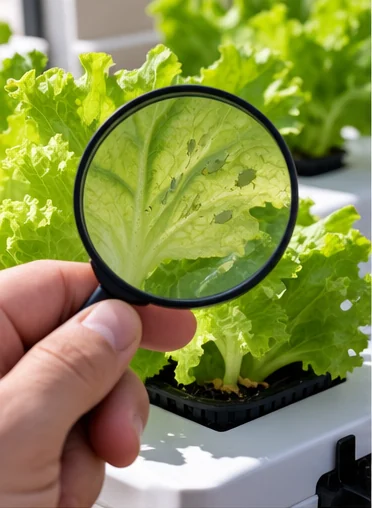
| Every day | Quick check: water level, pump, leaf color, undersides of leaves (aphids, downy mildew). |
| 2 to 3 times a week | Harvest and pinch; remove damaged leaves and flower buds. |
| Every week | Measure pH and EC, top up with plain water; check the roots (white, no smell). |
| About every two weeks | Change the solution. |
| Every month | Seedlings or cuttings to take over; clean prefilters and net pots. |
See also Routines: 5 minutes a day, 30 a week.
7. Quick diagnosis
| Symptom | Likely causes | What to do |
|---|---|---|
| Yellow young leaves, green veins (basil) | Iron or magnesium deficiency, pH too high | pH around 5.8, complete fertilizer with chelated iron. |
| Yellowing in bands, gray fuzz underneath (basil) | Downy mildew | Remove affected plants, humidity below 85%, ventilate. |
| Black spots after a cold night (basil) | Cold, below about 10 °C (50 °F) | Move away from cold windows and drafts. |
| Long, floppy stems, little fragrance | Not enough light | LED closer or on longer, aim for 12 to 15 mol/m²/d. |
| Sticky, curled leaves | Aphids | Shower, diluted potassium (black) soap, pinch off affected tips. |
| Fine webbing, stippled leaves | Spider mites, dry and warm air | Mist, shower, isolate. |
| Orange pustules under the leaves (mint) | Rust | Cut to the base, throw away the stems, start again from healthy divisions. |
| Thyme or rosemary drying out | Roots too wet | Free-draining growing medium, less frequent watering. |
| Brown, slimy roots | Solution too warm, lack of oxygen | Solution around 20 to 24 °C (68 to 75 °F), aeration, cleaning. |
Full method in Diagnosing: think before you correct. Next in this series: using and storing your herbs.
Frequently asked questions
How do you harvest basil without damaging it?
Cut the stem just above a pair of leaves, keeping at least two or three tiers of leaves below. The two buds in the axils of those leaves will grow into two new stems. Never take more than a third of the plant at once, and don’t pick only the large bottom leaves.
Why does my cilantro bolt so fast?
Cilantro is a short-cycle annual that flowers as soon as it gets warm or the days get longer. Grow it cool, around 22 to 24 °C (72 to 75 °F), harvest often and resow every three to four weeks. The seeds, green and then dry (coriander), are delicious too.
Should you cut off basil flowers?
Yes if you want leaves: once it flowers, basil slows down its leaf production and turns woody. Pinch off the flower spikes as soon as they appear. The flowers are edible and fragrant: use them in salads.
- University of Minnesota Extension, Preserving herbs by freezing or drying
- Iowa State University (C. Currey), Herbs 101: a production guide, Greenhouse Management
- Cornell University, Managing Basil Downy Mildew in the Greenhouse
- Oklahoma State University Extension, Electrical Conductivity and pH Guide for Hydroponics (HLA-6722)