Getting started
Starting budget: how much does hydroponics cost, and should you buy a ready-to-use indoor garden?
A jar on a windowsill, a DIY setup under an LED, or a ready-made indoor garden: what each costs to buy and over a year, electricity and refills included. The six things to check before buying a kit, a calculator to compare two options, and the mistakes that blow the budget.
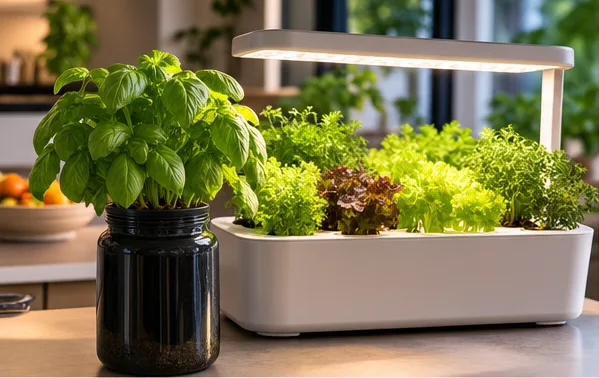
How much does hydroponics really cost? It is often the first question, sometimes asked while looking at an indoor garden spotted in a store. The answer depends less on the purchase price than on what you spend afterward: the lamp's electricity, nutrients, seeds or refills. Here are the three ways to get started, what they cost over a year, and what to check before buying a ready-to-use kit.
The list of essential equipment is in the 5 essentials to get started; the profitability of a larger garden, in productivity and profitability.
1. Three ways to get started
| Option | To buy | What costs money afterward | Who it suits |
|---|---|---|---|
| Kratky jar near a window | Under about $50 according to the site's beginner path, testers included | Nutrients and seeds, a few dollars | Learning to measure, risk-free |
| DIY setup (DWC, tower, wick) with a lamp | From a few tens to a few hundred dollars depending on size | The lamp's electricity, nutrients, seeds | Growing more, choosing your varieties |
| Ready-to-use indoor garden | $124.95 for 3 pods, $249.95 for 9 pods (Click & Grow US store, October 7, 2026) | Pod refills, a little electricity | Herbs in the kitchen without tinkering |
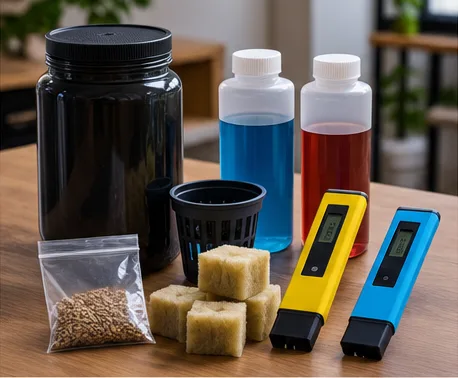
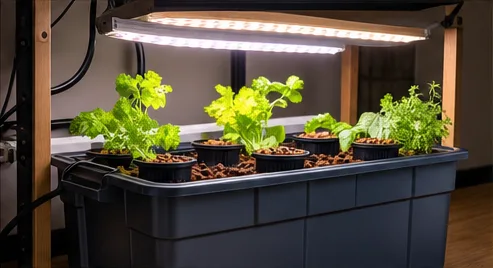
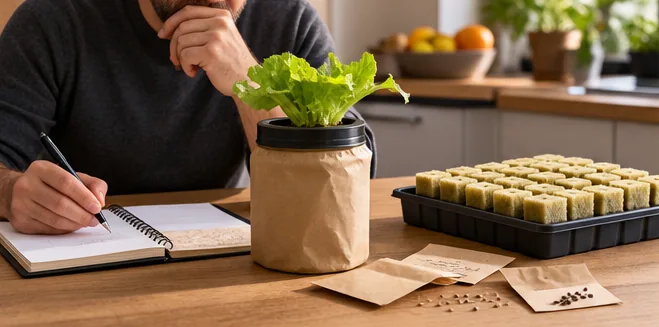
To start as simply as possible, follow the Kratky jar method; to compare systems, see choosing your system.
2. What a year costs

Three items to add up over a year:
- The spread purchase: the price divided by the number of years of use. Over three years, a $249.95 device costs about $83 a year.
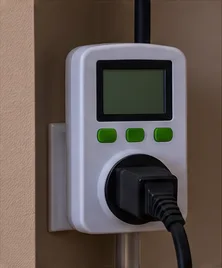
- Electricity: lamp wattage × hours per day × 365, divided by 1,000, in kWh, then multiplied by your price per kWh. According to EIA data summarized by Jouleio, the average US residential price was 18.56 cents per kWh in March 2026; this article uses $0.19 as the example. For comparison, Belgian households pay about €0.40 to €0.46 per kWh (see grow lights).
- Supplies: nutrients, seeds, growing medium, or pod refills for a kit. For an indoor garden, this is often the biggest item.

3. Indoor gardens: six things to check

| Example checked on October 7, 2026 | Smart Garden 3 | Smart Garden 9 |
|---|---|---|
| Price (US store) | $124.95 | $249.95 |
| Pods | 3 | 9 |
| LED lamp | 8 W | 13 W, 16 h on and 8 h off |
| Reservoir | 1.5 L (50.7 fl oz), about three weeks according to the brand | 4 L (1.06 gal), to refill every 1 to 3 weeks |
| Watering | Passive, no pump (wick principle) | |
| Refills | $14.95 per 3-pack | $29.95 per mixed 9-pack |
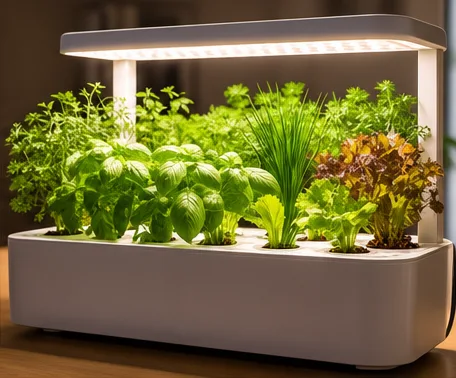
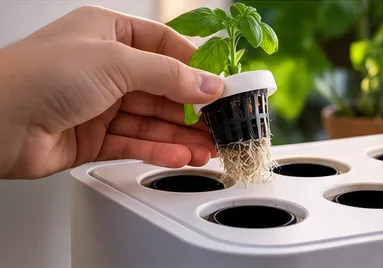
Brand data, given as an example with no partnership: prices change, and other brands exist (Prêt à Pousser, Véritable, AeroGarden…). Do the same check for the model you are interested in.
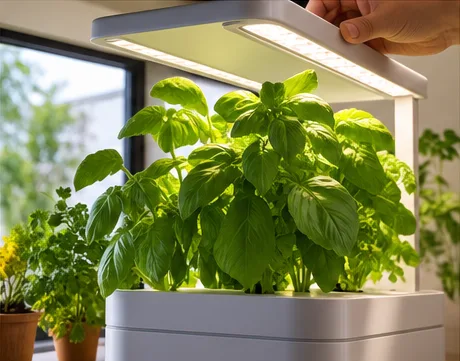
- Light: a few watts are enough for herbs and lettuce, not to get a tomato to fruit. An adjustable arm keeps the lamp close to the leaves (see grow lights).
- Pump or wick: many small indoor gardens run without a pump, using a wick. It is silent and never breaks down, but limited to small plants (see wick systems).
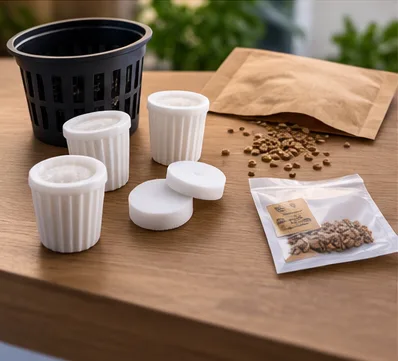
- Refills: the brand's pods only, or empty pods for your own seeds? Over several years, this is the question that matters most.
- Longevity: AeroGarden announced it was shutting down in late 2024 before being relaunched in spring 2025. A device that depends on an app and proprietary refills is more fragile than a standard setup.
4. Calculator: compare two options over a year
Enter two options, for example an indoor garden and a DIY setup. The default values are the Smart Garden 9 (option A) and a small DIY setup with a 20 W LED bar (option B): replace them with your own.
This calculation does not count water, your time or the value of the harvest: see productivity and profitability for the cost per kilo.
5. How-to: buy smart in six steps
- Decide what you want to harvest: herbs for the kitchen, lettuce every week, or fruiting vegetables. This sets the light and the size of the system.
- Start small: a Kratky jar or a 3-pod kit teaches you the essentials before you invest.
- Read the spec sheet: watts, pods, height under the lamp, reservoir volume, refill prices.
- Work out the year with the calculator above, using your price per kWh.
- Plan for measuring: for a DIY setup, a pH tester and an EC tester (see testers).
- Record your spending in the grow log: after one season, you know your real cost.
6. Common mistakes
| Mistake | Consequence | The fix |
|---|---|---|
| Comparing purchase prices only | Unpleasant surprise with refills | Calculate the cost over a year |
| Buying a large system to start with | Money lost if you give up | A jar or a small kit first |
| Wanting tomatoes under a small lamp | Leggy plants, little fruit | Herbs and lettuce, or a real grow light |
| Forgetting the pH and EC testers | Problems impossible to diagnose | Include them in the starting budget |
| Depending on a single brand of refills | Device unusable if they disappear | Check for empty pods or free choice of seeds |
| Leaving the lamp on 24 hours a day | Higher bill, stressed plants | A timer, with a duration suited to the crop |
7. Key takeaways
Do you have an indoor garden or a DIY setup? Share your real budget on the forum: those are the numbers that help beginners most.
Frequently asked questions
How much do you need to get started with hydroponics?
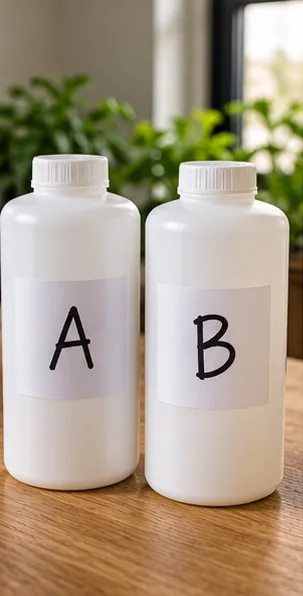
The smallest budget is a Kratky jar near a window: an opaque container, a two-part hydroponic nutrient, easy seeds and, ideally, a pH tester and an EC tester. The site's beginner path aims for under about $50 to get started. A larger setup with a lamp or a ready-to-use indoor garden quickly costs $100 to $250 to buy.
Is a ready-to-use indoor garden worth it?
Yes if you want herbs in the kitchen without any tinkering, and if you accept the cost of refills. No if you like to understand and measure things: a DIY setup often costs less to run and takes any seeds. Compare the two over a year with the calculator in this article.
How much electricity does an indoor garden use?
Not much: the Click & Grow Smart Garden 9 is rated at 13 W, on 16 hours a day, or about 76 kWh a year. At $0.19 per kWh, that is about $14 a year. A 100 W lamp on 16 hours a day costs about $9 a month.
Can you use your own seeds in an indoor garden?
It depends on the brand: some sell empty pods or “grow anything” kits, others only their ready-to-grow pods. Check before you buy, because refills make up a large part of the cost over time.
What happens if the brand of my kit disappears?
The device often keeps working, but refills, parts and the app may become unavailable. In late 2024, AeroGarden announced it was shutting down before being relaunched in spring 2025. A kit that accepts ordinary seeds and a standard growing medium limits this risk.
- Click & Grow, The Smart Garden 3 and The Smart Garden 9 product pages, US store, checked October 7, 2026
- Bob Vila, Hydroponic Gardeners, Rejoice: AeroGarden Is Back, March 7, 2025
- Texas Standard, Scotts Miracle-Gro is pruning AeroGarden from its product line, 2024
- U.S. Energy Information Administration (EIA), average residential electricity price, March 2026, as summarized by Jouleio, May 2026
- S. Semananda, J. D. Ward and B. R. Myers, Horticulturae, 2018