Part II · Design
Ebb and flow (flood and drain): flood, then drain, for well-fed, well-aerated roots
A grow bed filled with clay pebbles, a reservoir below, a pump and a timer: ebb and flow floods the roots, then lets them breathe. The principle, the plants that thrive in it, the equipment, step-by-step assembly, cycle settings, the bell siphon to do without a timer, maintenance and mistakes to avoid.
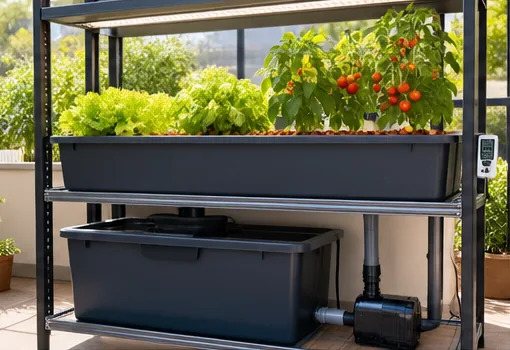
Ebb and flow, or flood and drain, is the tide on the scale of a grow bed: the solution rises, feeds the roots, then drains back down and lets air in. It is one of the most versatile systems in hydroponics: it handles lettuce as well as peppers, herbs as well as radishes, and you can build it with a tub, clay pebbles, a small pump and a timer.
1. The principle
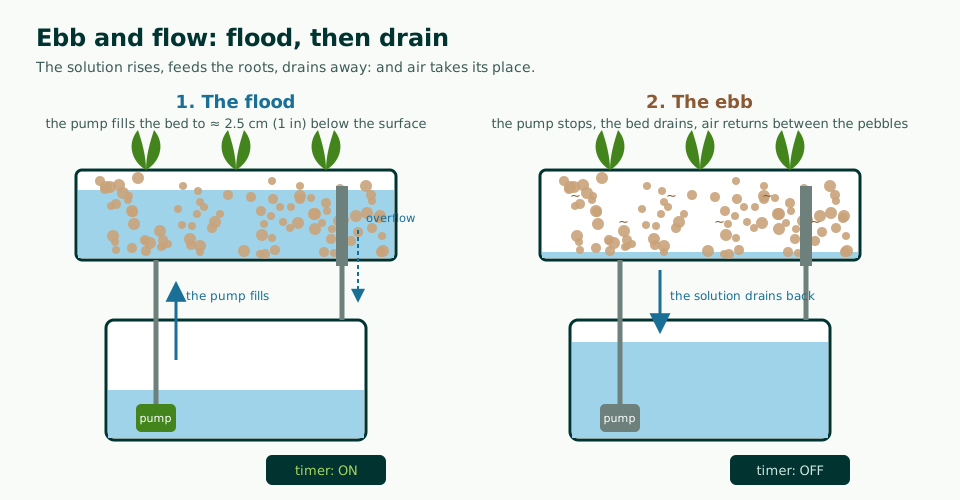
The system has four components: a grow bed, a reservoir of nutrient solution placed below it, a pump and a timer (Oregon State University). The timer turns on the pump, which fills the bed; then it shuts it off, and the solution drains back down into the reservoir by gravity. The roots benefit from the solution during the flood, then from the air that returns between the pieces of growing medium during the ebb.
| System | The roots | What changes |
|---|---|---|
| Kratky | In water and in air, no pump | The simplest, a single fill |
| DWC | Permanently in aerated water | An air pump running day and night |
| NFT | In a flowing film of water | Pump running continuously, no growing medium |
| Ebb and flow | In a growing medium, alternately flooded and aerated | Pump running intermittently, plants well supported |
To compare all the systems, see which system to choose.
2. For which plants?
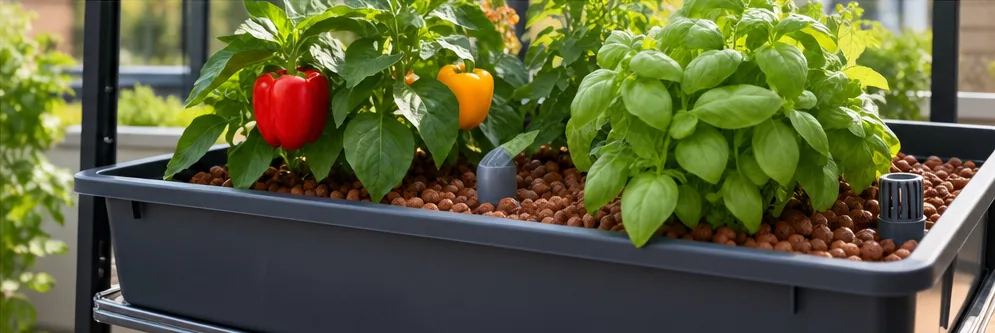
Oregon State lists among the crops commonly grown in ebb and flow: peppers, basil, cilantro, mint, radishes, spinach, Swiss chard, arugula, and flowers such as marigolds, petunias, zinnias or pansies. Two strengths explain this versatility: the medium holds tall or heavy plants well, and a flat bed accommodates pots of all sizes that you can move around at will.
3. The equipment
| Component | Role | Good to know |
|---|---|---|
| Grow bed | Holds the growing medium and plants | Opaque, food-grade; 30 cm (12 in) of medium in the FAO beds; a grooved bottom drains better (Oregon State) |
| Reservoir | Holds the nutrient solution | Opaque, below the bed, large enough to take back all the water from the bed. See tubs and reservoirs |
| Submersible pump | Fills the bed | Enough flow at the required height. See choosing a pump |
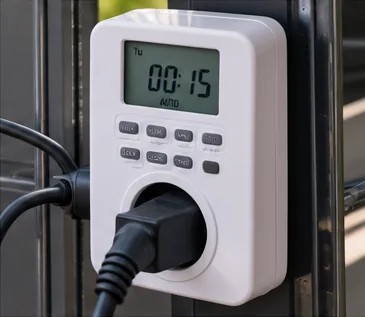
| Timer | Turns the pump on and off | Digital, in 1-minute steps, to set short floods |
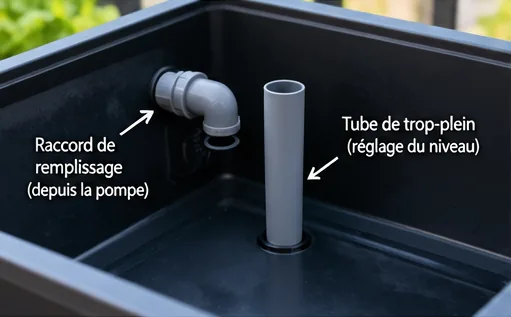
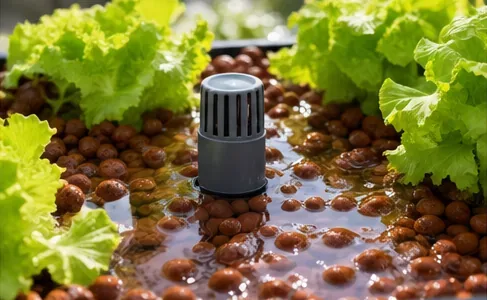
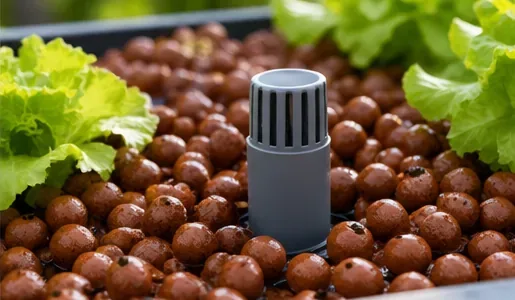
| Fill and drain fitting | The same opening lets water in and out | With a screen that holds back the pebbles |
| Overflow tube | Limits the flood height | Top at about 2.5 cm (1 in) below the surface of the medium |
| Growing medium | Supports the plants, holds a little water | Clay pebbles of 8 to 20 mm (5/16 to 3/4 in) (FAO); or fabric pots, rockwool, coco coir, bark (Oregon State). See growing media |
4. Building a small ebb and flow system
A 60 × 40 cm (24 × 16 in) bed over a reservoir
- Set up the reservoirAn opaque tub under the spot for the grow bed, on a level floor that can handle water. The grow bed sits above it, on a shelf or a sturdy stand.
- Drill the grow bedTwo holes in the bottom, with watertight bulkhead fittings: one for the fill and drain fitting connected to the pump, the other for the overflow tube that drops back into the reservoir.
- Set the overflowCut the tube so its top sits about 2.5 cm (1 in) below the future surface of the medium (Oregon State). That is the maximum flood height.
- Protect the openingsA screen or a perforated sleeve around each outlet, so the pebbles do not clog anything.
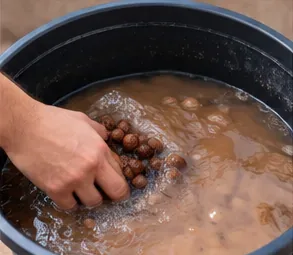
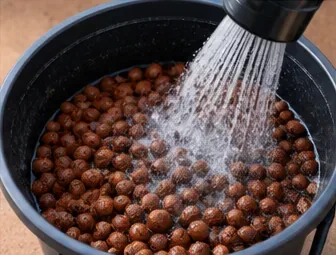
- Fill with growing mediumClay pebbles of 8 to 20 mm (5/16 to 3/4 in), rinsed until the water runs clear. Set the plants in, in net pots or directly in the pebbles.
- Measure the flood volumePour water into the bed with a measuring cup up to the top of the overflow: that is the volume the pump will need to send with each flood. The reservoir must hold noticeably more, so the pump stays submerged at the end of the flood.
- Plug in and testPump on the timer, outlet protected by a 30 mA residual-current device (GFCI). Start a flood by hand, time the filling and draining, check the overflow and look for leaks.
To choose the pump, a simple calculation: flow rate (L/h) = flood volume (L) × 60 ÷ desired fill time (min). For 12 liters (3 gal) in 10 minutes, you need 72 L/h (19 gal/h), at the height between the reservoir and the bed: the pump’s flow-versus-head curve tells you that, not the maximum flow rate printed in big letters on the box.
5. Setting the cycles
Oregon State gives the basic rule: fill to about 2.5 cm (1 in) below the surface, drain as soon as the medium is thoroughly soaked (it glistens), and restart before it dries out or the plants wilt. As for frequency, the FAO notes that many systems flood once or twice an hour, and that others succeed with only three or four floods a day.
- Start cautiously: a few floods during the day, evenly spaced, and watch the medium and the leaves.
- More floods when it is hot and bright, when the plants are large, or when the medium holds little water, like large pebbles.
- Fewer floods at night, in cool weather, with a medium that holds a lot of water, like coco coir or rockwool.
- Against pests and excess moisture, Oregon State advises lowering the flood height or spacing out the cycles to let the surface dry.
- Write down your settings and their effects in your online logbook, under systems.
6. The bell siphon: ebb and flow without a timer

Widely used in aquaponics, the bell siphon drains the bed automatically. The pump runs continuously; when the water reaches the top of the standpipe, the bell sitting over it creates a siphon effect that drains the bed all at once, faster than the water comes in. When the bed is empty, air gets under the bell, the siphon breaks and the bed fills up again (FAO).
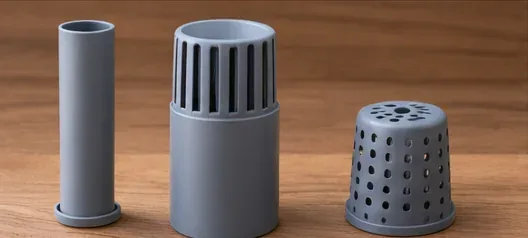
- The FAO dimensions, for a 1 to 3 m² (11 to 32 sq ft) bed, 30 cm (12 in) of medium and an inflow of 200 to 500 liters (53 to 132 gal) per hour: standpipe 2.5 cm (1 in) in diameter and 22 cm (8.7 in) tall; bell 7.5 cm (3 in) in diameter and 25 cm (9.8 in) tall, capped, with two 1 × 4 cm slots at the bottom and a 1 cm hole 5 cm from the bottom; perforated media guard 11 cm (4.3 in) in diameter and 32 cm (12.6 in) tall.
- The inflow rate is the key setting: too low, the siphon will not start; too high, it never breaks. The FAO warns that a bell siphon can be temperamental and needs attention.
- Three zones in the bed: a dry zone on the surface, 2 to 5 cm (1 to 2 in) deep, which blocks light and keeps the plant crowns dry; a wet and dry zone of 10 to 20 cm (4 to 8 in) where the roots live; and the bottom (FAO).
- Smaller bed, smaller parts: the dimensions depend on the size of the bed and the flow rate; test with plain water before planting.
With a timer, the FAO describes a variant: a standpipe drilled with a small 6 to 12 mm (1/4 to 1/2 in) hole near the bottom. During the flood, the pump brings in more water than the hole lets out; when the timer shuts off the pump, the bed drains slowly through the hole.
7. Maintenance
- Every day: hear or see a flood, check the reservoir level.
- Every week: pH and EC in the reservoir. See pH and EC and the nutrient calculator.
- Salts build up in the medium: Oregon State advises running a flood of pure water (reverse osmosis or distilled) from time to time to flush it.
- Algae: opaque bed and reservoir, dry surface of the medium. Oregon State even describes an “algae trap,” a lit compartment that draws it away from the growing area.
- Between two crops: remove the roots, wash the pebbles, clean the bed, reservoir, screens and pump. See maintenance routines.
- The pump: clean its intake strainer as soon as the flow drops, otherwise the floods no longer reach the right height.
8. Common mistakes
| Mistake | Consequence | The fix |
|---|---|---|
| No overflow | Flooding if the timer gets stuck | An overflow tube 2.5 cm (1 in) below the surface |
| Reservoir too small | Pump running dry at the end of the flood, or overflowing during the ebb | A reservoir that takes back all the water from the bed, with room to spare |
| Floods too long or too frequent | Suffocated roots, rotting crowns | Drain as soon as the medium is soaked |
| Floods too rare | Dry medium, wilting plants | Restart before it dries out, more often in summer |
| Unrinsed pebbles | Dust that clouds the solution and clogs the pump | Rinse until the water runs clear |
| Unprotected outlets | Pebbles in the pump or the overflow | Screens or perforated sleeves |
9. Key takeaways
Have you built an ebb and flow system or a bell siphon? Share your settings on the forum.
Frequently asked questions
How many times a day should you flood an ebb and flow system?
There is no single number. The FAO describes systems that flood once or twice an hour and others that succeed with three or four floods a day. Oregon State’s rule: restart before the medium dries out or the plants wilt. More cycles in hot, bright weather, fewer in cool weather and at night.
What growing medium for an ebb and flow system?
Expanded clay pebbles are the classic choice: they drain well and let air in. The FAO recommends pieces of 8 to 20 mm (5/16 to 3/4 in). Oregon State also mentions fabric pots, rockwool, coco coir or bark.
How do you keep the bed from overflowing if the timer gets stuck?
With an overflow tube in the bed that sends the excess back to the reservoir: the water can never rise above its top. And a reservoir large enough to take back all the water from the bed when it drains.
What is a bell siphon?
A standpipe covered by a capped bell. The bed fills continuously; when the water reaches the top of the pipe, the siphon starts and drains the bed all at once, then breaks when air gets under the bell. No timer needed, but the inflow rate must be carefully tuned.
What plants can you grow in ebb and flow?
Oregon State lists peppers, basil, cilantro, mint, radishes, spinach, Swiss chard, arugula and flowers such as marigolds or pansies. The medium also suits heavier plants, which it holds nicely upright.
- Oregon State University Extension (M. Nelson II, G. Langellotto, L. Nackley), Hydro hints: Ebb and flow (EM 9458), 2025
- FAO, Small-scale aquaponic food production (Somerville et al., technical paper 589), 2014: media beds, ebb and flow, bell siphon
- University of Florida IFAS Extension, Common Media Used in Hydroponics (EP623), 2025