Part II · Design
An energy-independent hydroponic garden: power use, small solar, mini wind turbines and low-cost tips
Pump, air pump, grow light: how much power does a hydroponic garden use, and can it run without the grid? What a small panel really produces in Belgium month by month, the 12 V solar kit step by step, a panel and battery calculator, the truth about mini wind turbines, “plug and play” panels and zero-watt solutions.
A pump running day and night, an air pump, a grow light: a hydroponic garden lives on electricity. Can you make it independent, with a small solar panel or a mini wind turbine on the balcony? Sometimes yes, often partly, and not for everything. Here is what each device really uses, what a panel produces in Belgium month by month, the 12 V solar kit step by step, a panel and battery calculator, and the solutions that cost next to nothing.
For the CO₂ and euro balance of your setup, see is hydroponics eco-friendly?. Here, the goal is to do without the grid.
1. What uses power
The calculation rule is simple: power (W) × hours of operation per day = energy (Wh per day). The actual power is on the device’s rating plate or, better, measured with a plug-in watt meter.
| Device | Operation | Sample calculation | Weight in the balance |
|---|---|---|---|
| Grow light | 12 to 16 hours a day indoors | 30 W × 14 h = 420 Wh per day | The biggest item, by far |
| Pump | Nonstop (NFT, tower), or in cycles (ebb and flow) | 10 W × 24 h = 240 Wh per day | Significant nonstop, moderate in cycles |
| Air pump | Nonstop (DWC) | 3 W × 24 h = 72 Wh per day | Small, but day and night |
| Sensors, ESP32 board | Nonstop | A few watts at most | Negligible |
| Water heater | In winter, if the reservoir is in the cold | Depends on the heating element and the thermostat | Very heavy: avoid it, move the reservoir instead |
Sample wattages: replace them with those of your devices, measured with a watt meter. See choosing a pump and grow lights.


2. First, use less
The cheapest watt is the one you do not use. Before buying a panel:
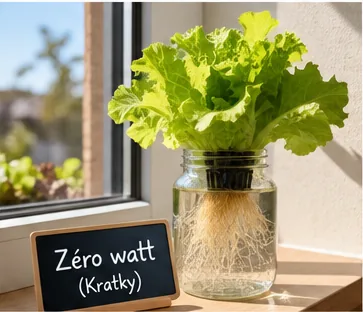
- Zero watts: a Kratky jar or a wick system has neither a pump nor an air pump. B. A. Kratky (University of Hawaii) designed his method precisely to do without electricity.
- Daylight instead of the lamp whenever possible: patio, sunroom, south-facing window. See natural light or LED.
- A timer on the light, and on the pump when the system allows it: an ebb and flow system pumps only a few minutes per cycle. NFT, on the other hand, cannot tolerate the pump stopping.
- A right-sized pump: an oversized pump throttled by a valve wastes power.
- No water heating: an insulated reservoir in a temperate room avoids the heating element.
3. What a small panel produces in Belgium
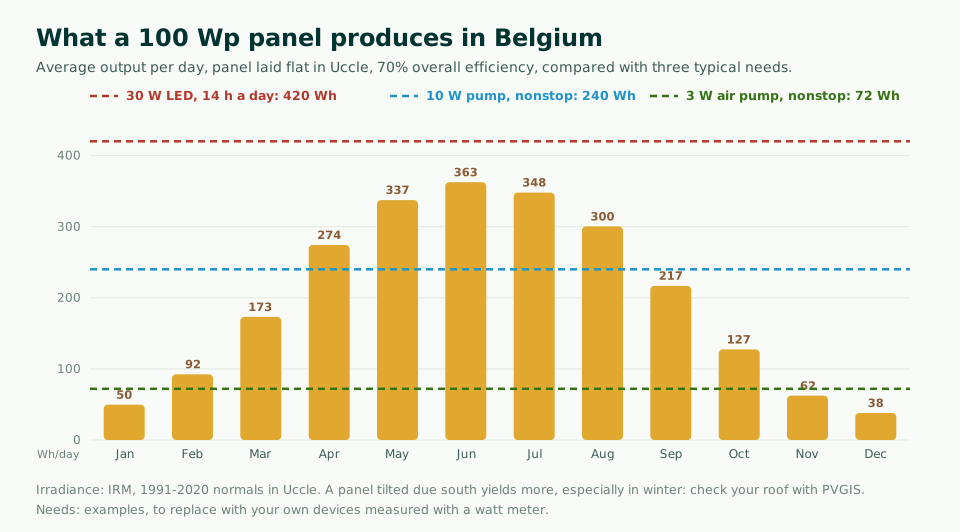
We started from the global irradiance measured at Uccle by the IRM (1991-2020 normals), month by month, with a 70% overall efficiency for losses in the panel, charge controller, cables and battery. It is a cautious setting: the IEC 61724 standard defines this “performance ratio”, which typically exceeds 80% in large modern solar plants; a small off-grid kit with a battery does less well.
| Month | Irradiance (kWh/m²) | 100 Wp flat (Wh per day) | Month | Irradiance (kWh/m²) | 100 Wp flat (Wh per day) |
|---|---|---|---|---|---|
| January | 22 | 50 | July | 154 | 348 |
| February | 37 | 92 | August | 133 | 300 |
| March | 77 | 173 | September | 93 | 217 |
| April | 118 | 274 | October | 56 | 127 |
| May | 149 | 337 | November | 27 | 62 |
| June | 155 | 363 | December | 17 | 38 |
Irradiance on a horizontal surface, rounded. A panel tilted and facing due south receives more, especially in winter. For your address, tilt and orientation, the European Commission’s free PVGIS tool gives the output month by month.

4. The 12 V off-grid solar kit
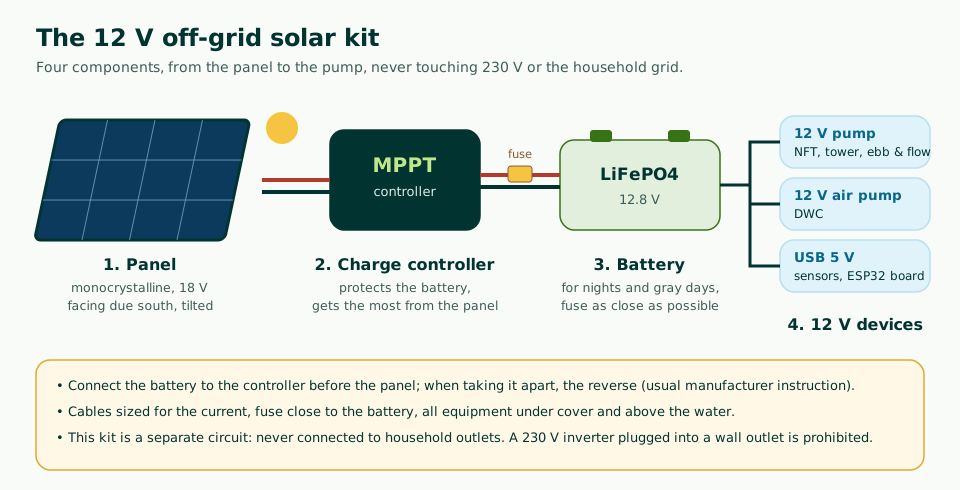
- The panel: monocrystalline, 50 to 200 Wp depending on the calculation, facing due south and tilted, with no shade between 10 a.m. and 4 p.m.
- The charge controller: essential between panel and battery. An MPPT model gets more out of the panel than a PWM model, especially in cold, cloudy weather; it protects the battery against overcharging and deep discharge.
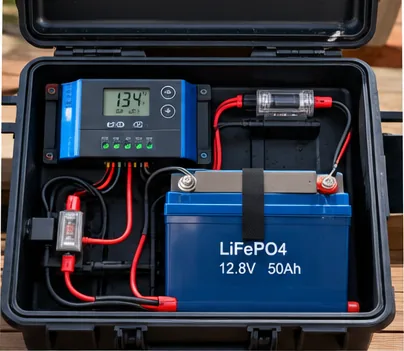
- The battery: 12.8 V lithium iron phosphate (LiFePO4), light and considered more stable than other lithium types; AGM lead-acid costs less up front but is heavy, ages faster and does not like being drained.
- The devices: 12 V pumps and air pumps directly, a USB port for sensors. Avoid a 230 V inverter: it wastes energy and brings 230 V back near the water.
- The fuse as close to the battery as possible, cables of the right gauge, everything under cover and above the water.
5. The calculator: panel and battery
Average irradiance at Uccle (IRM, 1991-2020 normals), panel laid flat: a cautious estimate for a panel tilted due south. A real year has weeks grayer than the average: keep a margin, and a plan B (mains outlet, low-level monitoring).
6. What about mini wind turbines?
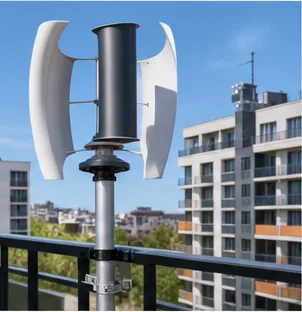
Appealing on paper, small wind turbines, vertical or not, almost always disappoint in town or on a balcony: the wind there is weak, slowed down and swirling. The largest public real-world measurement is still the Warwick Wind Trials (United Kingdom, 2007-2008): 26 small turbines mounted on buildings, monitored for a year.
- 214 Wh per day on average, downtime included, ranging from 41 to 2,382 Wh per day depending on the site.
- An average capacity factor of 0.85%: less than one hundredth of the advertised power.
- About 80 Wh per day drawn by their own electronics: at the poorest site, more than the output.
The authors conclude that these turbines can only be relied on at the most exposed sites. For a garden, a small panel at the same price almost always produces more. A turbine only makes sense in open countryside or by the sea, on a mast, as a winter complement to solar, and with the local council’s approval: check before you buy.
7. “Plug and play” balcony panels

These kits of one or two panels with a microinverter plug into a household outlet. According to Test-Achats (February 2026), they have been allowed in Belgium since April 17, 2025, provided the device is approved under the C10/26 prescription and listed by Synergrid:
- In Flanders: no notification to Fluvius below 800 W with a digital meter; notification within 30 days above that, or with an analog meter.
- In Wallonia (ORES, RESA): mandatory notification and a smart meter.
- In Brussels: smart meter required.
A good deal to lighten the summer bill for your lights, but no independence: these kits shut off automatically when the grid goes down, for safety. For the pump to keep running during an outage, you need the 12 V kit with a battery.
8. Other low-cost solutions
| Solution | What for | Limits |
|---|---|---|
| Kratky, wick | Salad greens, herbs, with no device at all | Not for large, thirsty plants |
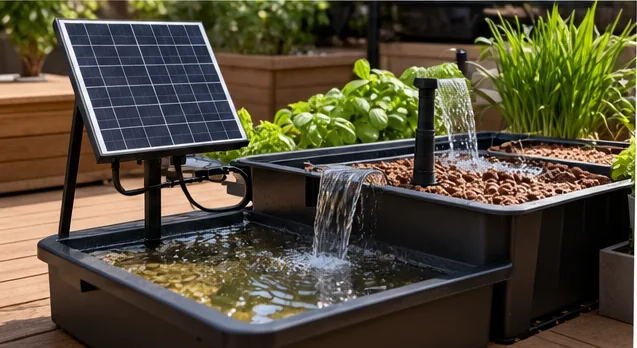
| Solar “fountain” pump, wired directly to its small panel | Daytime ebb and flow or watering, on a patio | Stops at the first cloud and at night: never for NFT or an air pump |
| Portable power station (battery with outlets, rechargeable from a panel) | Backup during an outage, short vacations | Limited capacity; the built-in inverter draws power |
| USB power bank | Sensors, ESP32 board, small USB air pump | A few days at most |
| Gravity-fed rainwater | Topping up the reservoir without a pump | You need a height difference. See which tank to plan for |

9. Tutorial: a solar-powered NFT pump on the patio
- Measure the pump with a watt meter for a day: for example 10 W, or 240 Wh per day.
- Choose the season: April to September on a Belgian patio.
- Calculate with the calculator: 100 Wp laid flat is enough from April to August; September needs about 120. Take a 150 Wp panel tilted due south to keep a margin.
- Size the battery: 240 Wh × 2 days ÷ 80% = 600 Wh usable, or a 12.8 V LiFePO4 of about 50 Ah.
- Assemble under cover: battery on the MPPT charge controller first, panel next, fuse near the battery, 12 V pump on the controller’s “load” output.
- Monitor: a float level switch and an alert (see automating your garden), and the charge controller cutting the pump before it drains the battery. Keep a mains-powered backup pump for the gray weeks.
10. Common mistakes
| Mistake | Consequence | The fix |
|---|---|---|
| Sizing for June | Battery empty by September | Calculate for the darkest month of the season |
| Trying to run grow lights on solar in winter | More than 1,000 Wp of panels needed | Daylight, efficient LED, timer |
| Solar pump with no battery for NFT | Roots dry out at the first cloud | Battery, or daytime ebb and flow |
| Panel wired directly to the battery | Battery overcharged, damaged | Always a charge controller |
| 230 V inverter on the kit | Energy losses, 230 V near the water | 12 V devices |
| Mini wind turbine in town | A few watts, and electronics that draw power | The same budget spent on a panel |
| Off-grid kit connected to a wall outlet | Danger for you and for grid technicians | Separate circuit; approved plug and play for the home |
11. Key takeaways
Does your garden run on sunshine? Share your setup and your numbers on the forum.
Frequently asked questions
Is a small solar panel enough for a hydroponic pump?
In the warm season, yes. Based on the irradiance measured at Uccle, a 100 Wp panel laid flat produces on average more than 240 Wh per day from April to August, enough to run a 10 W pump nonstop, as long as you add a battery for the night. In winter, you would need much more panel. The calculator in the article does the math with your devices.
Can you light your plants with solar power in winter?
Not with a small kit. A 30 W LED on 14 hours a day needs 420 Wh per day; in December, a 100 Wp panel laid flat produces on average only about 38 Wh per day in Belgium. You would need more than 1,000 Wp of panels and a large battery. For winter light, it is better to reduce your needs: a well-exposed window, an efficient LED, a timer.
Is a vertical mini wind turbine on the balcony worth it?
Rarely. In town, the wind is weak and turbulent. In the Warwick Wind Trials (United Kingdom, 2007-2008), 26 small turbines mounted on buildings produced on average 214 Wh per day including downtime, with an average capacity factor of 0.85%, and their electronics drew about 80 Wh per day. The authors consider them useful only on the most exposed sites.
Does a plug and play balcony panel make the garden independent?
No. These kits plug into a household outlet and feed their power into the home circuit: they reduce the bill, but shut off automatically during an outage. They have been allowed in Belgium since April 17, 2025 if they appear on the Synergrid list, with a notification to the grid operator depending on the region. For independence, you need a separate kit with a charge controller and a battery.
Which battery should you choose for a small solar kit?
A 12.8 V lithium iron phosphate (LiFePO4) battery is the usual choice today: light, considered more stable than other lithium types, and it handles many more charge cycles than lead-acid, according to manufacturers. Size it on your daily consumption, multiplied by the number of sunless days to cover, divided by the usable share (often 80%).
- IRM (Royal Meteorological Institute of Belgium), climate normals at Uccle 1991-2020, global irradiance
- European Commission, Joint Research Centre, PVGIS (photovoltaic calculation tool)
- IEC 61724 and Sandia National Laboratories (PVPMC), performance ratio
- Encraft, Warwick Wind Trials, final report, 2009
- Test-Achats, Panneaux solaires plug & play : législation en Belgique, February 2026
- Synergrid, prescription C10/26
- B. A. Kratky, University of Hawaiʻi CTAHR, non-circulating hydroponic methods