Part III · Water and nutrients
Herbs in hydroponics: tuning solution, light and climate for more flavorful herbs
Functional diagram, not to scale.
EC and pH by herb, light as DLI, temperatures for warm-season and cool-season herbs, magnesium and iron for basil, downy mildew, shared systems: every setting to optimize a hydroponic herb garden.
Growing herbs hydroponically is easy. Getting dense, green, highly fragrant leaves, week after week, takes a few precise settings. Here are the numbers, herb by herb, and how to make herbs with different needs share the same space.
1. The nutrient solution
| Herb | EC (mS/cm) | pH | Source |
|---|---|---|---|
| Basil | 1.0 to 1.6 | 5.5 to 6.0 | Oklahoma State |
| Sage | 1.0 to 1.6 | 5.5 to 6.5 | Oklahoma State |
| Parsley | 1.8 to 2.2 | 6.0 to 6.5 | Oklahoma State |
| Most herbs | 1.0 to 2.0 (optimum; tolerance 0.5 to 4.0) | 5.5 to 6.5 | Iowa State |
| Mixed system | 1.2 to 1.6 | 5.8 to 6.2 | Recommended compromise |
| Seedlings and cuttings | 0.5 to 0.8 | 5.5 to 6.0 | Diluted solution |
- Basil is a heavy magnesium feeder and quickly shows iron deficiency if iron runs short or the pH climbs too high (Iowa State). Symptom: young leaves yellow with green veins. Keep the pH below 6.2 and use complete nutrients with chelated iron.
- More nitrogen does not mean more flavor: a solution that is too rich gives large, tender leaves, but not necessarily more fragrant ones. Stay within the ranges.
- Top up with plain water between readings, and change the solution about every two weeks. Monitoring is explained in pH and EC: the two numbers to track.
2. Light: the number one factor for aroma and density
Iowa State recommends a DLI of at least 12 to 15 mol/m²/day for most culinary herbs. Under LEDs, DLI is calculated as: PPFD × hours of light × 0.0036.
| Lighting | PPFD needed for 13 mol/m²/day | Verdict |
|---|---|---|
| 16 hours a day | About 225 µmol/m²/s | The gentlest setting for LEDs |
| 14 hours a day | About 260 µmol/m²/s | A good compromise |
| 12 hours a day | About 300 µmol/m²/s | Requires a more powerful LED |
The DLI calculator does the math for your light. Signs of too little light: long, spindly stems, widely spaced internodes, pale leaves with little fragrance.
3. Two climates for two families
| Group | Herbs | Air temperature | Risk |
|---|---|---|---|
| Warm-season herbs | Basil, Thai basil, oregano, thyme, rosemary | Basil grows well up to about 30 °C (86 °F); it suffers below 10 °C (50 °F) (blackened leaves) | Cold, drafts |
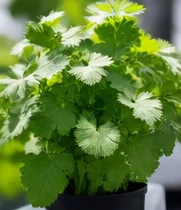
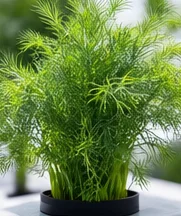
| Cool-season herbs | Parsley, cilantro, dill, chervil, chives | 22 to 24 °C (72 to 75 °F) (Iowa State) | Bolting in heat and long days |
| Solution | All | Around 20 to 24 °C (68 to 75 °F) | Above that, less oxygen and root rot |
In the same room, put basil in the warmest spot (top of the tower, near the light) and cilantro in the coolest (bottom of the tower, by the window).
4. Growing herbs together in one system
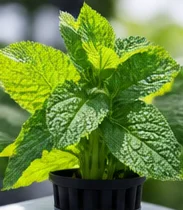
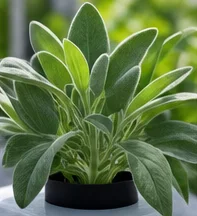
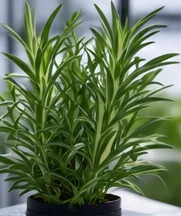
- “Tender herbs” system: basil, parsley, cilantro, chives, oregano, lemon balm. EC 1.2 to 1.6, pH 5.8 to 6.2. This is the classic herb tower.
- “Mint” tub: kept separate, so the roots don’t take over everything.
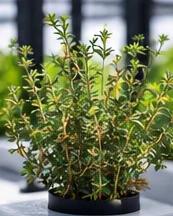
- “Mediterranean” growing medium: thyme, rosemary, sage, in Dutch buckets or pots of clay pebbles, watered less often, in full sun.
- Lettuce and herbs: they get along well in a tower, with the same solution settings.
5. Preventing basil downy mildew
Basil downy mildew (Peronospora belbahrii) is the disease growers fear most. Telltale sign: yellowing in bands along the veins, with a grayish fuzz under the leaves. According to Cornell:
- it needs wet leaves or humidity of at least 85% in the foliage to infect;
- it forms spores after at least 7 hours of darkness;
- you prevent it by keeping humidity below 85%, avoiding wetting the leaves, spacing plants out and moving air with a fan; in greenhouses, nighttime lighting disrupts sporulation;
- resistant varieties exist (Rutgers “DMR” lines, Amazel, Prospera), and some seed companies offer steam-treated seed.
6. Maximizing aroma at harvest
Essential oils peak at specific moments. The University of Minnesota recommends picking in the morning, just after the dew has evaporated, and notes that flavor is best when flower buds appear, before they open. For harvesting techniques in detail, see Pruning and harvesting herbs.
Settings cheat sheet
| Parameter | Setting |
|---|---|
| EC | 1.2 to 1.6 in a mixed system; 1.8 to 2.2 if parsley dominates |
| pH | 5.8 to 6.2 |
| Light | 12 to 15 mol/m²/day or more, 14 to 16 h a day |
| Air | 20 to 26 °C (68 to 79 °F); basil warmer, cilantro cooler |
| Solution | 20 to 24 °C (68 to 75 °F), oxygenated, changed about every two weeks |
| Humidity | Below 85%, air moving constantly |
Settings summarized in the basil, parsley, cilantro, mint, chives, thyme and oregano crop guides.
Frequently asked questions
What EC for hydroponic herbs?
Iowa State gives a possible range of 0.5 to 4.0 mS/cm and an optimum of 1.0 to 2.0 for most herbs. Oklahoma State gives 1.0 to 1.6 for basil and sage, 1.8 to 2.2 for parsley. In a mixed system, aim for 1.2 to 1.6.
How much light does basil need indoors?
Iowa State recommends a DLI of at least 12 to 15 mol/m²/day for most herbs. Under LEDs, that means about 230 to 290 µmol/m²/s for 14 to 16 hours. A windowsill in winter is generally not enough.
How do I prevent basil downy mildew?
Cornell recommends keeping humidity below 85% around the foliage, not wetting the leaves, moving air with fans, spacing plants out and, in greenhouses, lighting at night to disrupt spore formation. Resistant varieties are available.
- Iowa State University (C. Currey), Herbs 101: a production guide, Greenhouse Management
- Oklahoma State University Extension, Electrical Conductivity and pH Guide for Hydroponics (HLA-6722)
- Cornell University, Managing Basil Downy Mildew in the Greenhouse
- University of Minnesota Extension, Preserving herbs by freezing or drying